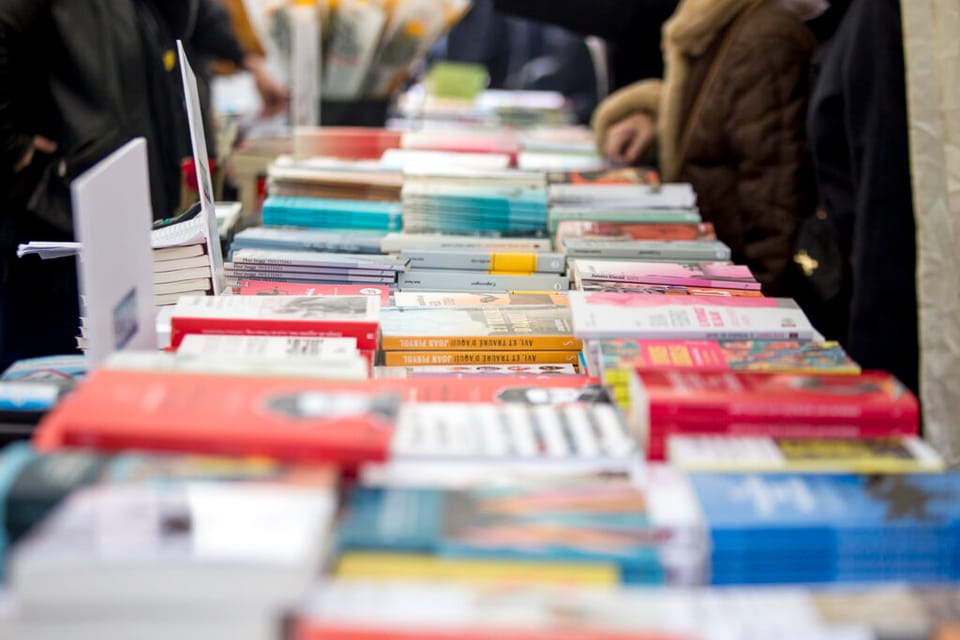
As Catalonia prepares for its beloved Sant Jordi celebration on 23 April, VilaWeb has released a comprehensive list of 25 books, offering readers a unique opportunity to delve into the region's intricate identity. The selection aims to provide profound insights into Catalonia, covering historical events, philosophical essays, biographies, and political analyses.
Sant Jordi, a cherished Catalan tradition, sees streets filled with stalls selling books and roses, symbolising love and culture. This annual event encourages reading and celebrates Catalan literary heritage. VilaWeb's recommendations serve as a guide for residents and visitors keen to explore the complexities and nuances of Catalan society.
The list features "Raimon: Aquest jo que soc jo" (Raimon: This Self That I Am) by journalist Miquel Alberola, a biography of the iconic singer-songwriter Raimon. Alberola's work illuminates Raimon's pivotal role in shaping Catalan landscapes and thoughts through his music, according to Òscar Andreu, assesses the current state of the Catalan language. Raimon himself endorsed the book, stating during its presentation, "If someone wants to know, more or less, who I have been until now, here is this book."
Exploring Catalan Identity and Language
Another significant recommendation is "Manual de defensa del català" (Manual for the Defence of Catalan) by comedian Òscar Andreu. Andreu, co-presenter of RAC1's "La competència" programme, assesses the current state of the Catalan language. He highlights threats to its existence and proposes active usage as a radical measure for its survival. The concise book, which expands on a popular monologue, blends personal anecdotes with counter-arguments against Spanish nationalist prejudices.
"Arrels rebels" (Rebel Roots) by journalist Agnès Batlle pays tribute to ten teenagers committed to rural life. These young individuals defy the generational crisis facing Catalonia's farming sector. They strive to maintain the region's agricultural and livestock fabric despite significant challenges. Batlle's book underscores the importance of understanding the rural sector to comprehend Catalonia fully.
Joan-Daniel Bezsonoff's "La llengua dels amics" (The Language of Friends) offers a linguistic autobiography. The North Catalan writer, with Russian and Catalan ancestry and French education, embraces the Catalan language of his grandparents and friends. His work serves as a declaration of love for Catalan, particularly its fragile status in Northern Catalonia.
Uncovering Hidden Histories and Power Structures
Rafa Burgos, with contributions from Roger Vinton and Jesús Rodríguez, presents "La Caixa. Una història mai no explicada" (La Caixa. A Story Never Told). This book sheds light on the previously untold critical history of La Caixa, now CaixaBank. Burgos uncovers anonymous testimonies and previously unseen documents, revealing the inner workings of one of Catalonia's most powerful entities, a subject long considered taboo.
Francesc Canosa's "La Catalunya discoteca" (Disco Catalonia) explores the country's history through the lens of disco culture. The book coincides with the 50th anniversary of Big Ben, once Europe's largest disco, located between Mollerussa and Golmés in Pla d'Urgell. Canosa dissects the phenomenon's impressive figures, its evolution, and the influence of cars, drugs, and electronic music, illustrating how a disco shaped generations and nightlife culture.
Political Landscape and Social Issues
Philosophers Jordi Corominas and Joan Albert Vicens examine the rise of the far-right in "Extrema dreta: Què ens hi juguem?" (Extreme Right: What Is At Stake?). Their book analyses the far-right's growing political influence in Catalonia and beyond. It aims to sow doubt among sympathisers and provide arguments for its detractors.
"Dos morts i mig. Un crim ultra al Maresme" (Two and a Half Deaths. An Ultra Crime in Maresme) by Damià del Clot and Albert Calls revisits a silenced chapter of Catalan history. The book reconstructs the 1980 murders of Juana Caso and José Muñoz in Cabrera de Mar, Maresme. It strongly suggests a political crime committed by the far-right, which the deep state allegedly sought to conceal. The authors overcame numerous obstacles to recover this memory.
Natza Farré tackles the taboo subject of drug addiction in her brave autobiographical novel, "L'última vegada que et dic adeu" (The Last Time I Say Goodbye). Farré directly and ironically dissects her experiences as the younger sister of a heroin addict. Her 200-page work offers a raw and personal account of the impact of addiction on families.
Historical Perspectives and Educational Debates
Josep Fontana, a pre-eminent historian, provides an excellent synthesis of his writings on the Franco regime in "El Franquisme" (Francoism). Fontana's work, compiled from his essays, class notes, and lectures, offers crucial insights into the most defining period of Catalonia's contemporary history. His research was instrumental in promoting understanding of those years.
"Temps per a l'escola" (Time for School) by Montse Jiménez, Carme Ortoll, and Coral Regí, three experienced teachers, reflects on the challenges facing Catalan schools. They discuss inclusion, child poverty, bureaucracy, technology use, and the decline of Catalan in classrooms. The book offers a collective, courageous, and proactive perspective on the educational debate, highlighting its fundamental role in the country's future.
These diverse literary offerings provide a valuable resource for anyone seeking a deeper understanding of Catalonia's past, present, and future. They encourage engagement with critical issues and celebrate the region's vibrant cultural and intellectual landscape during Sant Jordi. Residents and visitors can explore these titles to connect more profoundly with the local context.
Come and join our Barcelona English Speakers community on WhatsApp.
Originally published by VilaWeb Feed. Read original article.