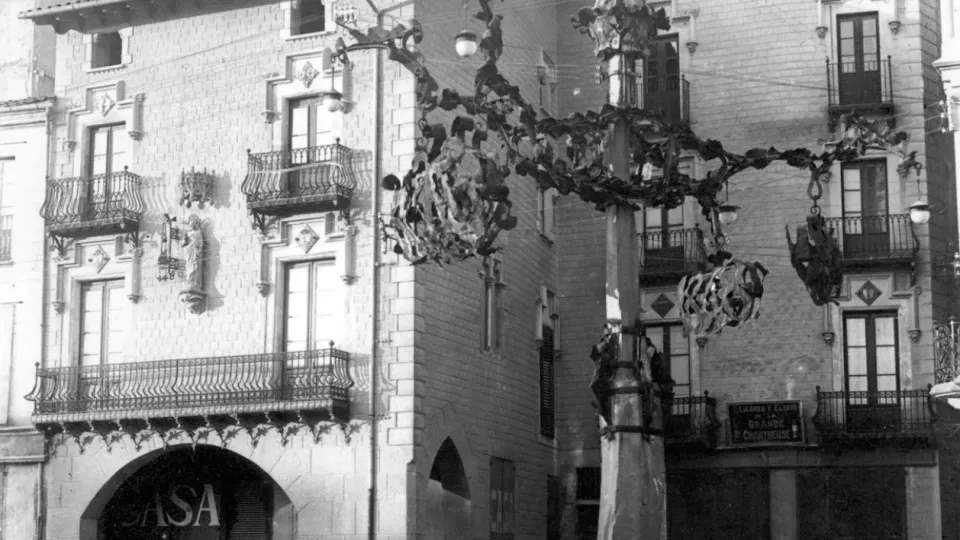
Vic's Plaça Major once featured two monumental modernist lampposts, designed with input from renowned architect Antoni Gaudí, which the local council controversially dismantled in 1924. These unique structures, installed in 1910, served as a significant urban landmark for just 14 years before their removal and repurposing as scrap metal and street paving. This decision remains a notable "what if" in Catalan architectural history.
The lampposts were not minor works. Officials inaugurated them in 1910 to commemorate the centenary of philosopher Jaume Balmes' birth. They stood as two obelisk-like structures at the entrance to the square, connecting to the new avenue from the station. Architect and researcher Óscar Farrerons Vidal, from the Universitat Politècnica de Catalunya (UPC), documented the rapid shift in public perception. Just two years after their installation, residents began demanding their removal. Complaints included obstruction to carriages and vehicles, noise, the risk of falling debris, and even "the indecorous use of the space as an improvised urinal," Farrerons reported in his 2024 article "Els fanals modernistes de la plaça Major de Vic" (The Modernist Lampposts of Vic's Plaça Major) for the Revista de Vic.
Gaudí's Advisory Role in Vic
Popular tradition has long attributed the project solely to Antoni Gaudí, one of Catalonia's most celebrated architects. However, Farrerons' research suggests it was a collective work, with Gaudí providing advisory input. Gaudí was in Vic during the spring of 1910 on medical advice, a particularly intense period in his career. He was simultaneously working on major projects like Barcelona's iconic Sagrada Família basilica and the Palau Güell. During this time, accompanied by collaborators Josep Canaleta and Josep Maria Pericas, the idea for the monumental lampposts emerged. The designs differed; one lamppost was taller, featuring metallic arms like tree branches adorned with decorative elements and the dates 1810-1910. The other was shorter and simpler, with a single light point. Both rested on basalt column bases sourced from Castellfollit de la Roca, a town known for its dramatic basalt cliffs.
Public Complaints and Calls for Removal
Despite their artistic merit and connection to a globally recognised architect, public dissatisfaction grew quickly. Attempts were made to save the structures; artisans, tradespeople, and city representatives signed petitions in their defence. They even proposed a reform. Gaudí himself confirmed his involvement in the project by letter and expressed his willingness to improve it. However, the reform never materialised, and the lampposts' condition continued to deteriorate. On 11th August 1924, the Vic Ajuntament voted unanimously for their demolition. Dismantling began the very next day, marking the end of a unique piece of modernist urban furniture.
Political Context and Repurposed Materials
Local historians interpret the decision within the broader political climate of the Primo de Rivera dictatorship (1923-1930). This era was often unfavourable towards certain symbols of Catalan identity, potentially influencing the council's swift action. The ultimate fate of the materials highlights the story's powerful narrative. According to the UPC study, workers converted the metallic parts into scrap. They transformed the basalt stone bases into paving stones for Carrer Arquebisbe Alemany in 1926. This meant a significant piece of work, linked to Gaudí and Catalan Modernism, literally ended up under the city's feet, a stark contrast to its original monumental purpose. This repurposing underscores a period when historical and artistic preservation held less value than practical utility or political expediency.
Virtual Reconstruction and Lasting Legacy
Today, a century later, Vic views this history differently, recognising the lost opportunity for heritage and tourism. Óscar Farrerons has spearheaded academic projects at the UPC aimed at a virtual reconstruction of the lampposts. This initiative seeks to recover their memory and imagine how the city's heritage and tourism projection might have changed had these unique structures not become scrap. The loss of these Gaudí-linked lampposts represents a poignant chapter in Catalonia's modernist architectural history. It prompts ongoing reflection on urban planning, the ephemeral nature of public art, and the importance of heritage preservation for future generations. This story serves as a reminder of how quickly public perception and political will can alter a city's landscape and its historical narrative.
Sign up for our new entrepreneurs community Bizcelona, now accepting our second wave of applicants.
Originally published by 20 Minutos Barcelona. Read original article.