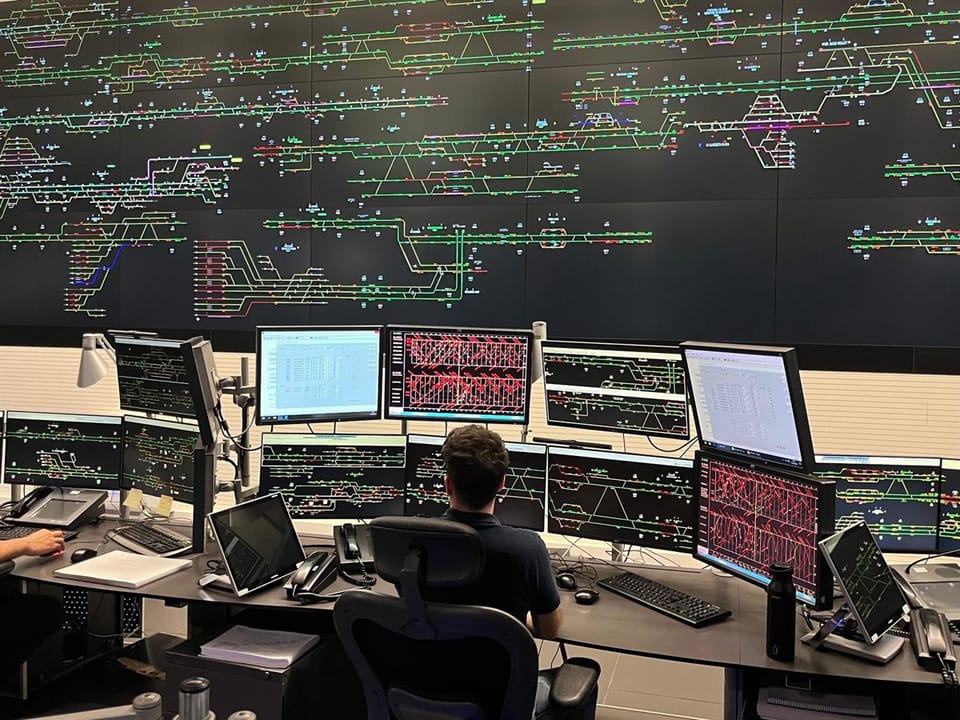
Adif officials have confirmed a critical vulnerability. The advanced Siemens software managing train traffic in Barcelona's Circulation Regulation Centre (CRC) lacks a backup plan for potential failures. This admission follows a significant incident in late January. That event severely disrupted services across Catalonia, affecting thousands of daily commuters.
The state-of-the-art software oversees approximately 1,200 trains daily across Catalonia. Adif sources describe it as "pioneering" and state "there is nothing better on the market." However, the absence of an immediate contingency plan poses a risk. Future software malfunctions could again cause widespread disruption for residents relying on the extensive rail network. Adif is actively developing new systems to mitigate the impact of such failures. These solutions, however, will not offer immediate returns.
The CRC in Barcelona, located at Estació de França, operates continuously. It runs 24 hours a day, 365 days a year. More than 20 professionals work each shift. They manage real-time traffic for 114 stations and 14 Centralised Traffic Control (CTC) bands. This CTC system ensures that only one train occupies the track section between two stations at any given time. This enhances safety and efficiency across the region. Adif has also increased staffing levels at the CRC since the incidents in January. These included disruptions caused by "Storm Harry" and highlighted system vulnerabilities.
Enhancing Network Resilience and Safety
Adif's research and development department is also creating systems to detect landslides and other track obstructions. This is a critical concern for network safety. Currently, the network can quickly identify power supply issues, such as a lack of catenary power. This directly affects electrical supply. However, it does not detect when a tree or rock falls onto the tracks without damaging the electrical system. This poses a potential hazard. The entire network undergoes constant technological updates to improve performance and reliability. Despite these efforts, artificial intelligence has not yet been integrated into its core operations for traffic management.
Operational Scope and Rail Operators
The Northeast Circulation Sub-directorate, which includes Catalonia, manages 1,938 kilometres of railway network. This represents a substantial portion of Spain's rail infrastructure. The CRC in Barcelona specifically oversees 900 kilometres of this extensive system. This makes it a vital hub for regional transport. Barcelona's railway network serves four main passenger operators. These are Rodalies de Catalunya, Renfe Viajeros, Alsa, and FGC (Ferrocarrils de la Generalitat de Catalunya). These services are crucial for daily commutes and intercity travel for millions of residents. Additionally, 21 different operators utilise the network for freight services. This supports the region's economy. Passenger rail traffic in Spain was liberalised in 2020. This followed the liberalisation of freight traffic in 2005, increasing competition and service options.
Future Developments for Rail Stability
Adif continues to invest in technological advancements and increased personnel. This aims to enhance the resilience of Catalonia's vital rail network. Should the servers of the equipment itself fail, rather than the provider's software, a dedicated support team is prepared. They will automatically activate services at Sants station, mobilising operators to minimise disruption. The ongoing development of new detection and mitigation systems aims to prevent future software-related disruptions. This will ensure smoother operations for the thousands of daily train movements, improving reliability for all users.
Come and join our Barcelona English Speakers community on WhatsApp.
Originally published by Europa Press Barcelona. Read original article.