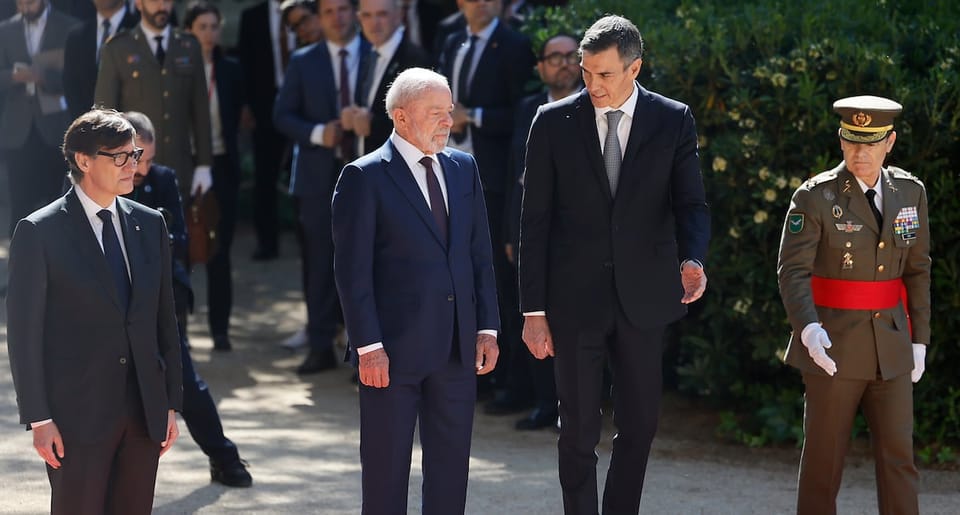
Barcelona has recently hosted a flurry of high-profile international events, including a symposium organised by Politico, two international summits, and the Global Progressive Mobilisation conference. President Salvador Illa, who assumed office in 2024 and has been in his role for approximately 18 months, has championed external projection and internationalisation policies. The Catalan Government asserts that this intense agenda demonstrates Catalonia has regained its “international prestige”, which socialists believe was diminished during the decade of the procés independence movement.
Illa's Diplomatic Engagements
President Illa welcomed Brazilian President Lula da Silva and Spanish Prime Minister Pedro Sánchez for the first Spain-Brazil summit at the Palau de Pedralbes, a venue serving as a secondary seat for the Generalitat. Sources from the Catalan Government reported that Illa greeted President Lula, expressing honour at his presence in Catalonia. Illa also hosted the IV Democratic Meeting on Saturday and maintained a busy schedule of international meetings. He met President Lula at the Barcelona Supercomputing Center on Friday and was scheduled to meet Mexican President Claudia Sheinbaum on Sunday. Additionally, he met Uruguayan President Yamandú Orsi on Saturday, though a planned lunch with Colombian President Gustavo Petro was suspended. Illa advocates for multilateralism and peace, stating, "Those of us who do not like the way the world is going must organise ourselves."
Illa has actively pursued international engagement since taking office. He has visited Japan, China, Korea, and Mexico, and frequently travelled to European cities such as Paris, London, Rome, and Milan. These trips aimed to promote initiatives like the “Four European Motors”, an economic cooperation framework encouraged by former President Jordi Pujol. Illa stated his intention to visit Brussels as often as Madrid. His notable international engagements include a visit with Pope Leo XIV and attending the Circular Bioeconomy Alliance in London, founded by King Charles III of England, where he discussed climate change. However, a sudden illness, pubic osteomyelitis, forced him to postpone planned trips to the United States and Germany.
Navigating Domestic Crises
While focusing on international affairs, Illa simultaneously contends with numerous domestic challenges. His government, a minority administration relying on support from Esquerra Republicana de Catalunya (ERC) and Comuns, was compelled to withdraw its budget proposal. This occurred because it failed to meet ERC’s demand for progress on Generalitat’s income tax (IRPF) collection. Consequently, Catalonia continues to operate under the 2023 budget. Both parties have set a deadline until summer to approve new accounts, aiming to resolve this unprecedented parliamentary setback.
Additionally, the Generalitat faces a pending financing model agreement in the Spanish Congress. Illa has also had to address the persistent crisis affecting the collapsed Rodalies commuter rail network. His administration reversed a plan to offer economic incentives for adjusting sick leave. Furthermore, the government is embroiled in two significant conflicts: one with doctors and another with teachers. Both groups demand improved salaries, increased resources, and reduced bureaucracy, particularly after the government raised salaries for the Mossos d'Esquadra police force. Illa also announced imminent improvements to the governance of El Prat Airport, a key demand from ERC. However, Maurici Lucena, President of Aeropuertos Españoles y Navegación Aérea (AENA), disputes this, asserting it is legally impossible because shareholders own Spanish airports, despite the majority being publicly held.
Catalonia's Global Standing Amidst Challenges
The Catalan Government maintains that Barcelona's recent hosting of international events signifies Catalonia's resurgence on the global stage. This international focus, much like for Prime Minister Pedro Sánchez, provides Illa with a platform to address domestic issues. Protests during these events remained minimal, limited to a small group of Vox supporters and posters from the Candidatura d'Unitat Popular (CUP) criticising NATO and demanding self-determination. Despite the internal pressures, Illa expressed pride on Friday that Barcelona was hosting the global conference he would close on Saturday.
As the Generalitat continues to navigate its complex domestic agenda, including budget negotiations and ongoing public service disputes, its commitment to international engagement remains a central pillar of President Illa's strategy. The coming months will reveal how effectively the administration can balance its global ambitions with the pressing needs of Catalonia's residents.
Sign up for our new entrepreneurs community Bizcelona, now accepting our second wave of applicants.
Originally published by El País Barcelona. Read original article.