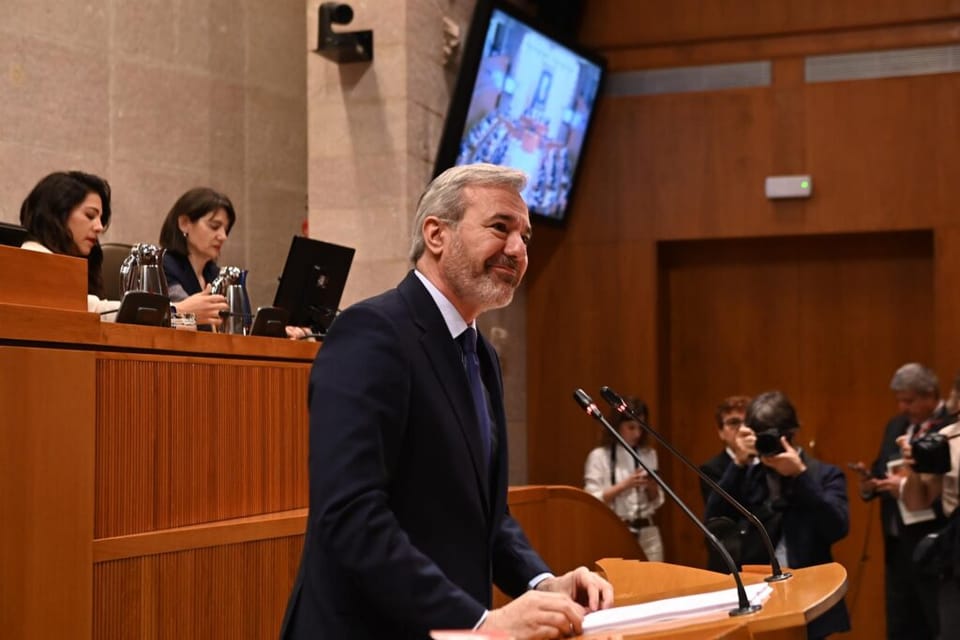
Jorge Azcón, the candidate for President of Aragon, declared his government would directly transfer the disputed Sijena monastery murals from Barcelona's National Art Museum of Catalonia (MNAC) if the museum does not comply with court orders. He made this statement during his investiture speech in the Aragonese Parliament.
Azcón stated Aragon would "not hesitate to do so with the best technical teams, to achieve the return of our heritage." He framed the return of the historical-artistic collection to the Royal Monastery of Santa María de Sijena as a "legitimate aspiration of Aragonese people for decades." This ongoing dispute affects a significant cultural institution in Barcelona, a city home to 1.6 million residents and a major tourist destination.
Azcón criticised Spanish Culture Minister Ernest Urtasun. He accused Urtasun of clearly taking sides with "the Catalan and pro-independence institutional offensive." This offensive, Azcón claimed, aims to hinder the fulfilment of court rulings. The candidate suggested the minister "does not seem to have read the Sijena rulings." He also stated Urtasun "never demonstrated willingness to work with Aragonese technical teams and with the government of Aragon."
Legal Basis for Transfer
Azcón asserted that justice tribunals confirmed Aragon's ownership of the artworks. These rulings also established the obligation to transfer them to the monastery. Furthermore, the viability of this transfer was proven, he added. He emphasised that the Chapter House of the Aragonese monastery is "in perfect condition" to receive the paintings. This legal battle has spanned many years, drawing significant attention in both Catalonia and Aragon. The murals, Romanesque frescoes from the 12th and 13th centuries, were removed from Sijena during the Spanish Civil War for safekeeping.
MNAC's Position and Aragonese Aspirations
The candidate also called MNAC's appeal against a 56-week deadline "desperate." He suggested the museum is "not capable of dismantling and transferring the works without damaging them." Azcón reiterated that Aragonese people favour "agreement, understanding, coexistence, and compliance with agreements." He stressed their continued work with "the same professionalism and technical rigour." He added that "nobody is more interested than the Aragonese in the return of the paintings and in perfect condition."
Cultural Heritage and Statute of Aragon
Azcón highlighted Sijena as a word with "its own resonance." He called it "one of the backbone columns" of the Statute of Aragon. Article 22 of the Statute obliges Aragonese public authorities to recover cultural heritage that left the territory. Therefore, he considered it essential to reunite the entire mural collection at the Sijena monastery. For Barcelona, the potential loss of these significant Romanesque artworks from the National Art Museum of Catalonia (MNAC) collection would alter the museum's display and its narrative of Catalan art history.
The future of the Sijena murals remains uncertain. MNAC's appeal against the transfer deadline is still pending. The new Aragonese government's actions will determine the next steps in this long-running cultural and legal battle, which continues to generate tension between the two autonomous communities.
Come and join our Barcelona English Speakers community on WhatsApp.
Originally published by VilaWeb Feed. Read original article.