New archaeological findings in Barcelona propose a radical reorientation of Roman Barcino’s forum and temple, challenging the traditional understanding of the ancient city. This redefinition has sparked a significant scientific debate among leading experts and will delay updates to official museum displays.
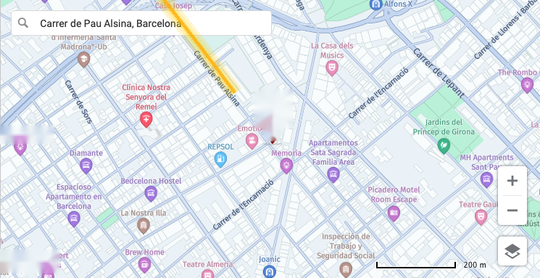
For decades, visitors to the Barcelona History Museum and the Roman temple remains on Carrer Paradís have learned about Barcino as a small, 10-hectare city. This traditional view placed the forum beneath Plaça de Sant Jaume, with a temple on Mount Tàber facing Montjuïc. However, the discovery of a public square pavement between Carrer Jaume I and Carrer Hèrcules prompted the Barcelona Archaeology Service to suggest a fundamental shift. This new hypothesis posits the forum lies under Carrer Llibreteria, Jaume I, and Hèrcules, rotated 90 degrees towards the sea.
Sources from the Barcelona Archaeology Service stated, “We consider it appropriate, at this stage of the research process, to maintain a certain prudence.” They await the publication of results with “the corresponding scientific rigour.” Consequently, immediate modifications to museum exhibits are not planned until findings are “duly consolidated.”
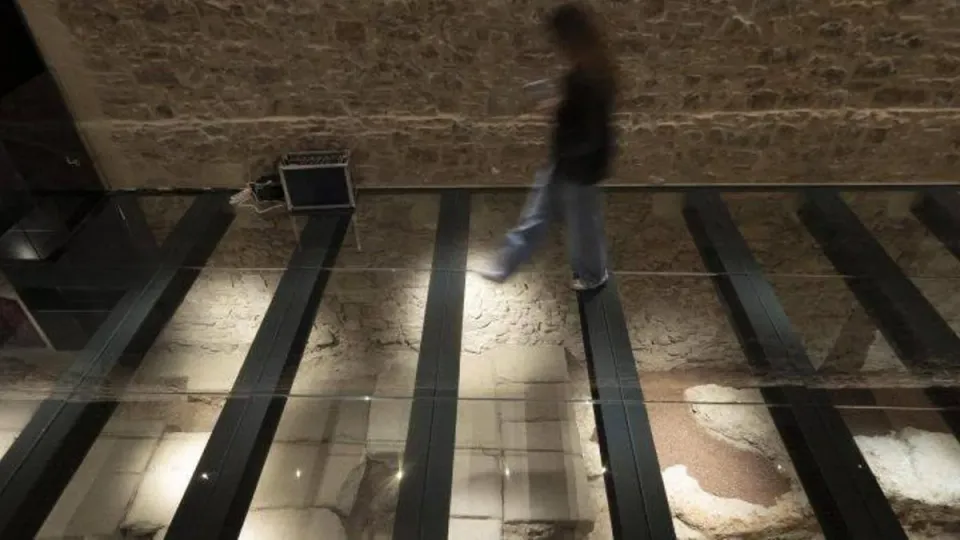
The debate intensified at a 24 March workshop, bringing together intervention leaders and prominent archaeologists. Xavier Maese of the Barcelona Archaeology Service and Jordi Amorós, who led the Palau Recasens excavation, strongly support the new findings. They describe the 41 square metres of paving slabs, oriented 14 degrees off the street grid, as “the most solid hypothesis” for Barcino’s foundational forum.
Expert Divisions on Barcino’s Layout
Not all experts agree with this radical reinterpretation. Isabel Rodà, former director of the Catalan Institute of Classical Archaeology, and Julia Beltrán de Heredia, former conservator of the Barcelona History Museum’s subsoil, urged further scrutiny. They acknowledge the discovery of a public square but suggest it could be a second plaza, not necessarily the foundational forum. Rodà stated, “I see no conclusive element to rotate the forum.” Ceramic and coin findings from the site currently offer only late antique chronologies.
Archaeologist Ricardo Mar, however, supports the new hypothesis. He argues it “confirms the need to totally revise the forum’s orientation.” Mar’s previous work convincingly defined Barcino’s sea gate as its main access. This would logically align both the temple and forum towards the sea.
Revisiting Mount Tàber’s Topography
The proposed rotation of the temple has sparked an even more heated discussion. In 2014, Héctor Orengo and Ada Cortés suggested orienting the temple towards Tibidabo. Cortés reiterated this, asking, “If it looks towards the sea, where are the stairs?” Critics argue this orientation would leave no space between the temple and city walls. It would also direct the façade towards one of Barcino’s less significant gates.
The traditional orientation of the temple stems from Antoni Celles’ 1835 excavation. Orengo claims Celles’ findings were “invented and topographically impossible.” Architect Reinald González believes Celles’ findings are valid but could fit any of three proposed temple formats. Sandro Ravotto, who has studied the temple for three years, initially doubted Celles but now finds “not a single flaw” in his work. Celles’ excavations included columns difficult to explain if the temple did not face Plaça de Sant Jaume. However, 17th-century chronicler Pujades’ sketch shows the temple “in a superior state of preservation,” suggesting it faced the sea or mountain.
New Evidence and Ongoing Questions
Many elements found at a consistent elevation of just over 12 metres above sea level suggest the forum might have been a single platform. This revives a long-held idea by Ferran Puig, former director of the archaeology service. Puig proposed that the “valley” currently formed by Carrer Jaume I was merely a lowering of the terrain when the street opened in the 19th century. Amorós and Mar concur, stating the new forum necessitates rethinking Barcino’s layout and even the hill’s topography. Reinald González’s 2018 study for the Ajuntament also found the sea-oriented temple model best fits the terrain’s slope.
Jordi Amorós believes a mortar structure indicates the forum ended at Carrer Hèrcules, placing the Sant Just i Pastor church outside the complex. Beltrán de Heredia disputes this, having identified a large public building podium beneath the basilica. Excavations at Hotel Barcino uncovered two 60 by 60-centimetre wells, connected by a channel under an elevated pavement. Amorós suggests these formed a monumental fountain’s hydraulic mechanism at the forum’s edge. Beltrán de Heredia questions excluding the Sant Just complex, which has similar water-related elements nearby.
Another piece that challenges the new forum proposal is the building on Carrer Sant Honorat, near Las Ramblas. Beltrán de Heredia identifies this as “100% a curia,” which would traditionally close the forum. She concluded, “If we have to revise, we revise; but everything must be taken into account. You cannot rotate the forum and ignore the curia.” Orengo added, “It makes no sense to rotate the forum and not also rotate the temple.” The debate continues on whether a city of fewer than 2,000 inhabitants could have a forum occupying nearly 50% of its surface.
Future of Barcino’s Public Displays
The Barcelona Archaeology Service indicates that new hypotheses “may be incorporated as such into informative narratives, visits, or new devices” at the Barcelona History Museum. However, they do not foresee “an immediate modification of museographic devices” until results are fully consolidated. Eduard Riu, an archaeologist from the Catalan Government Heritage Department, concluded, “We must not be afraid to propose new hypotheses.” Meanwhile, the newly excavated site, recovered due to hotel chain Gargallo’s interest in heritage, will open to the public for the first time on 16 May during the Night of the Museums.
Come and join our Barcelona English Speakers community on WhatsApp.
Originally published by El Periódico Barcelona. Read original article.