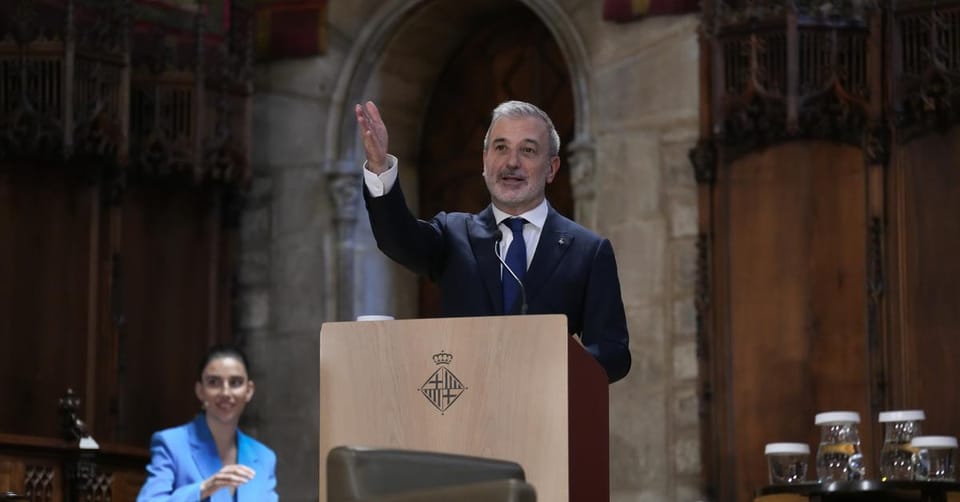
Barcelona City Council has initiated plans to erect a new monument honouring Ildefons Cerdà. He was the visionary urban planner behind the city's iconic Eixample district. Mayor Jaume Collboni announced the project on Thursday. He spoke at an institutional event in the Saló de Cent. This event officially inaugurated "Any Cerdà," commemorating the 150th anniversary of Cerdà's death. The monument will stand in Plaça Universitat. This site is chosen for its historical significance. It marks the starting point for the Eixample's construction. This decision rectifies a long-standing historical oversight regarding Cerdà's profound impact on Barcelona's urban landscape.
A Long-Awaited Recognition
The city will launch a competition for three acclaimed artists in early May. They will design the tribute. Officials expect to select a winning proposal by July. The city plans the monument's final installation in Plaça Universitat for the first half of 2027. Mayor Collboni stated, "The return of a debt to modern Barcelona begins." He added that the city "will recognise and place in its rightful position" the figure of this engineer.
The location choice holds significant symbolic weight for the city. The College of Civil Engineers of Catalonia confirmed Plaça Universitat as the chosen site. Mayor Collboni explained, "There we will pay homage, so he can look at the city he dreamed of and which unfolded." He also highlighted that the central headquarters of the University of Barcelona (UB) began construction at this very square. The UB building was the Eixample's first major public building. This connection underscores the deep historical ties between Cerdà's vision and the area's development.
Historical Context of Cerdà Monuments
This initiative addresses a long-standing omission in Barcelona's public recognition of Cerdà. The capital city previously had a monument dedicated to the Eixample's creator. It existed during the Franco era. Authorities inaugurated it in 1959 in the often-controversial Plaça Cerdà. Then-Mayor Josep Maria de Porcioles oversaw its unveiling. However, authorities dismantled the sculpture in 1971. This occurred during the extensive construction of the Ronda del Mig ring road. Antonio María Riera Clavillé created that earlier work. It combined concrete blocks with iron bars in an abstract structure. It aimed to replicate the Eixample's distinctive grid pattern.
More recently, in early 2025, journalists Lluís Permanyer and Carles Cols initiated another form of recognition. They installed a commemorative plaque at Carrer Bruc 69. This was the house where Cerdà once lived. The Eixample district is home to over 260,000 residents. It remains one of Barcelona's most distinctive and densely populated areas. Its characteristic grid layout, wide streets, and chamfered corners are hallmarks of Cerdà's innovative urban planning. This design significantly shaped Barcelona's growth and identity. It provided a rational and equitable framework for urban expansion.
Cerdà's Enduring Urban Legacy
Beyond the new monument, the "Any Cerdà" programme aims to explore Cerdà's enduring legacy. It also examines its relevance today. Sílvia Paneque, the Regional Minister for Territory, and Pere Calvet, Dean of the College of Civil Engineers of Catalonia, both emphasised the importance of Cerdà's vision for contemporary urban challenges. Mr Calvet praised Cerdà's ability "not to choose between technical knowledge and public action." He further remarked that "technique without political and social orientation risks not responding to people's real needs." Cerdà's principles of hygiene, sunlight, and green spaces are still highly relevant today.
Looking Ahead: Cerdà's Vision for Modern Barcelona
Barcelona continues to face challenges. These include climate change, housing shortages, and the need for more public green spaces. Cerdà's original design offered innovative solutions for public health and quality of life. The city continues to adapt his model. For example, it uses the Superblock programme. This programme aims to reclaim public space for pedestrians and green areas within the Eixample. The new monument will serve as a permanent, prominent reminder of his foundational contributions to modern Barcelona. It will also highlight his forward-thinking approach to urban living.
Sign up for our new entrepreneurs community Bizcelona, now accepting our second wave of applicants.
Originally published by Ara Cat. Read original article.