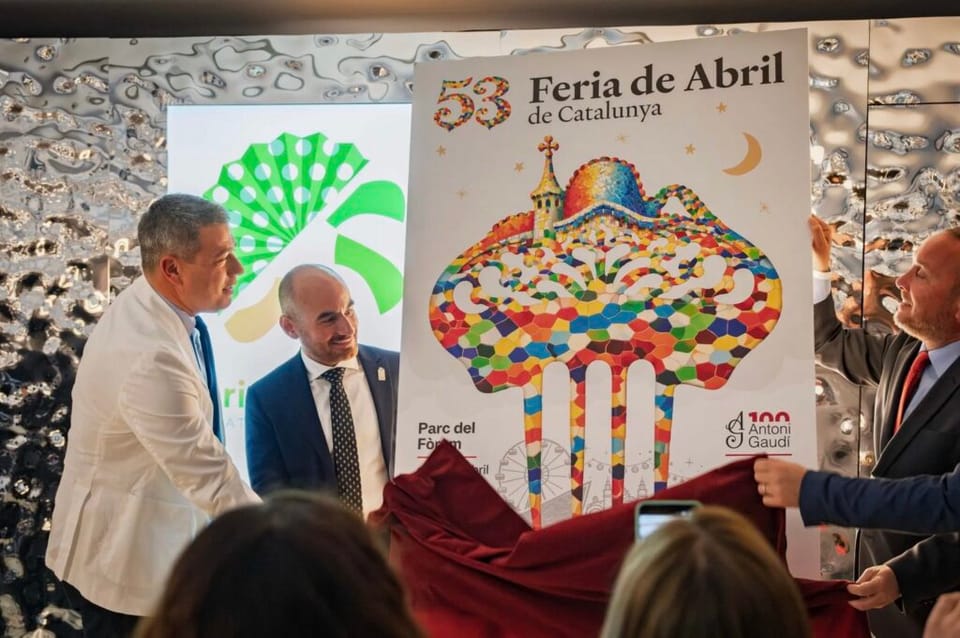
Recent events in Barcelona have sparked a significant debate over the representation and appropriation of Catalan cultural symbols. This includes the controversial use of Antoni Gaudí's iconic Casa Batlló in a poster for the “Feria de Abril de Catalunya” and the presence of a Spanish National Police book stall on Rambla de Catalunya during the Sant Jordi festival.
During Sant Jordi, Barcelona's patron saint day, the Spanish National Police and the Spanish Police Foundation operated a book stall on Rambla de Catalunya, a central thoroughfare. This marked the first time the national police had a dedicated presence at the city's major cultural celebration. The city council, led by the Socialist Party of Catalonia (PSC), approved this presence.
The Spanish government delegate in Catalonia, Carlos Prieto, supported the initiative. He stated, “The police are also culture.” Media outlets also reported on the stall. SER Catalunya posted on social media, “Passeig de Gràcia looks beautiful: books, roses, dragons and... the National Police debuting with its own stall.” El Periódico also highlighted the “blue touch” the police presence added to the traditional red of the roses.
Casa Batlló Poster Sparks Controversy
Separately, the “Feria de Abril de Catalunya” unveiled a poster featuring Casa Batlló transformed into an Andalusian peineta, a traditional comb. This poster appeared during the centenary year of Antoni Gaudí's death, an anniversary that has seen various institutions discuss the architect's legacy. Critics argue this depiction decontextualises Gaudí's work and his historical connection to Catalan identity.
The presentation of this poster took place inside Casa Batlló itself, a UNESCO World Heritage site located on Passeig de Gràcia. Furthermore, the official website for the landmark is casabatllo.es, using Spain's national internet domain. The Spanish Ministry of Digital Affairs states this domain “identifies worldwide with our [Castilian] culture and language.” This choice of domain has also drawn criticism from those concerned about the representation of Catalan heritage.
Gaudí's Historical Catalan Identity
Antoni Gaudí, a revered figure in Catalan modernism, held strong Catalanist views. In 1924, police arrested Gaudí for refusing to speak Castilian when attending a mass commemorating those who died in the 1714 Siege of Barcelona. This historical event shows Gaudí's commitment to the Catalan language and identity. This incident remains a significant part of his biography.
Critics of the recent poster and website domain argue these actions disregard Gaudí's legacy. They say these actions also diminish his connection to Catalan culture. The debate highlights how historical figures and their works become symbols in ongoing discussions about national and regional identity.
Broader Cultural Representation Debate
The debate extends to other areas of cultural integration and representation in Catalonia. For example, the website for the Federation of Andalusian Cultural Entities in Catalunya does not offer a Catalan language version. This absence is seen by some as a lack of reciprocity, despite significant public sponsorship and support for such entities within Catalonia.
This situation reflects a broader pattern where Catalan symbols and institutions face pressure regarding their cultural expression. The discussion centres on how public events and iconic landmarks should reflect Catalonia's distinct cultural heritage. These incidents highlight ongoing tensions surrounding cultural identity and political symbolism in Barcelona and Catalonia.
This discussion will likely continue as Barcelona navigates its unique position within Spain. Residents and cultural observers remain engaged in how local institutions and public events represent the region's diverse cultural heritage.
Come and join our Barcelona English Speakers community on WhatsApp.
Originally published by VilaWeb Feed. Read original article.