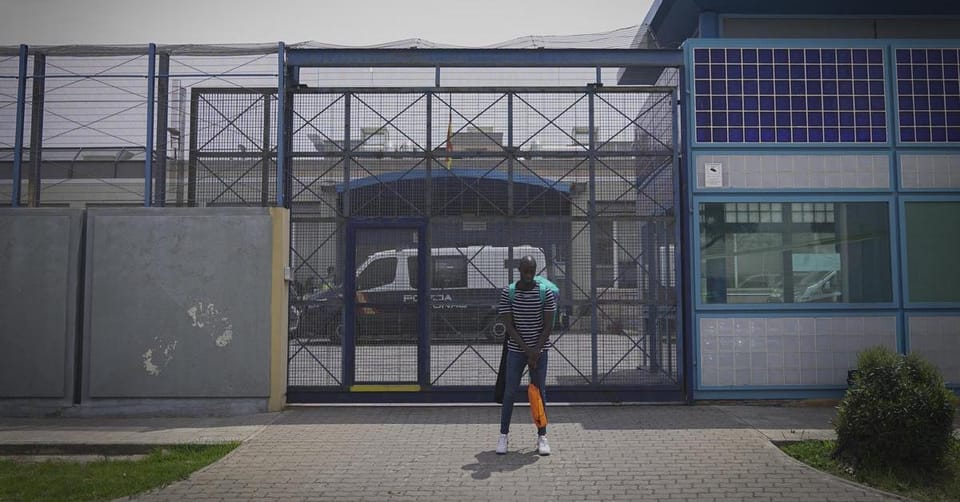
The Centre d'Internament d'Estrangers (CIE) in Barcelona's Zona Franca holds hundreds of non-criminal individuals in "very harsh conditions" for up to 60 days, despite being officially designated as a non-penitentiary facility. Journalists are systematically denied access to the site, which operates with strict schedules and constant surveillance.
Cel Far, a social educator with the Migra Studium organisation, stated, "They spend weeks deprived of liberty in very harsh conditions just for not having papers." Last year, only 7% of those detained at the Barcelona immigration detention centre had committed a crime. However, all face the same strict confinement. This reality affects many families, including Luisa, who discovered her pregnancy shortly before her partner's detention. "I feel cheated, I never imagined they could expel him overnight," she said.
The Barcelona CIE, hidden among factories and warehouses, processed 401 people in 2024. This followed 592 in 2023 and 482 in 2022. Across Spain, over 1,000 individuals faced expulsion from the country's seven CIEs in 2024. These centres, including facilities in Madrid, Valencia, and Algeciras, operate under the Ministry of Interior. The Policia Nacional manages them.
Concerns Over Police Management and Conditions
Experts question the suitability of police managing these centres. Markus González Beilfuss, a law professor and CIE researcher, stated that "police should guard the premises and ensure security, not distribute razors." Josetxo Ordóñez, a criminal lawyer specialising in CIEs, noted that directors "have real headaches controlling agents: they pull strings to remove the most violent ones." He added, "They themselves have admitted it to me; some people lose control."
Interns frequently report issues with food quality and quantity. Marta Vallverdú from the Irídia collective highlighted, "One of the most recurrent complaints over the years is the scarcity and poor quality of meals." Moha, who spent 40 days detained last winter, recalled a police officer shouting at him during breakfast. He later felt pressured to withdraw a formal complaint.
Lack of Privacy and Allegations of Abuse
Visiting rooms at the Barcelona immigration detention centre offer little privacy. Judges Zita Hernández and Alejandra Gil requested in December 2024 that the centre's director ensure "respect for privacy and confidentiality." However, no significant changes have occurred. The facility's 46 rooms, spread across three pavilions, house four to six people per cell. These cells have barred doors and enclosed toilets. Some interns describe them as foul-smelling.
Conditions in the showers also draw criticism. During the winter of 2025, multiple accounts suggested only one of the seven showers had hot water. "We take turns; while one gets naked to apply soap, the other showers," an intern explained. In 2012, Aziz Faye, a co-founder of the Top Manta brand, was detained at the Barcelona CIE when cells lacked toilets. This forced interns to bang on bars for assistance. Police often met these requests with "annoyance and insults" or no response.
Isolation Cells and Human Rights
The CIE also uses isolation cells. These are small five-square-metre spaces with a concrete bed and thin mattress. They lack furniture or a toilet. Interns are placed there without judicial order. Marta Vallverdú of Irídia warned, "The cell does not meet international human rights standards." She added, "It's basically a camera that watches you 24 hours: maybe you don't commit suicide, but you can go crazy." During the COVID-19 pandemic, these cells isolated positive interns for weeks.
Allegations of police brutality also surface. On 22 March 2025, Jorge Leonardo sustained a head injury from a police baton during an altercation with another intern. He subsequently went on hunger strike. He lost six kilogrammes before transfer to Hospital Clínic. Authorities expelled him two weeks later without prior notification. A judge never took his statement regarding the incident.
The Struggle for Freedom and Identity
Abraham Calderón, a Peruvian national detained in 2023, experienced the dehumanising effect of the system firsthand. Police referred to him as "145," his intake number. Fellow detainees called him "Doc" for his help with legal papers. "I had never been in prison, the worst thing is that they looked at you like a criminal, but I hadn't done anything," Calderón recalled. He was detained in Figueres and faced expulsion.
Interns can stay for a maximum of 60 days. If authorities cannot complete an expulsion within this period, they must release the individual. Calderón filed an asylum request on his 59th day, leading to his release. In 2024, 180 asylum applications were made at the Barcelona CIE. 40% of these resulted in freedom. After his release, Calderón spent two months living in a park in Sant Boi de Llobregat, near Barcelona. An Arrels survey shows 74% of homeless people in the city are immigrants. This year, Calderón finally secured legal residency.
The ongoing operation of the Barcelona immigration detention centre highlights persistent concerns about human rights, transparency, and the treatment of non-criminal migrants. Despite calls for reform and judicial interventions, conditions inside the facility remain a point of contention for human rights organisations and legal experts.
Come and join our Barcelona English Speakers community on WhatsApp.
Originally published by Ara Cat. Read original article.