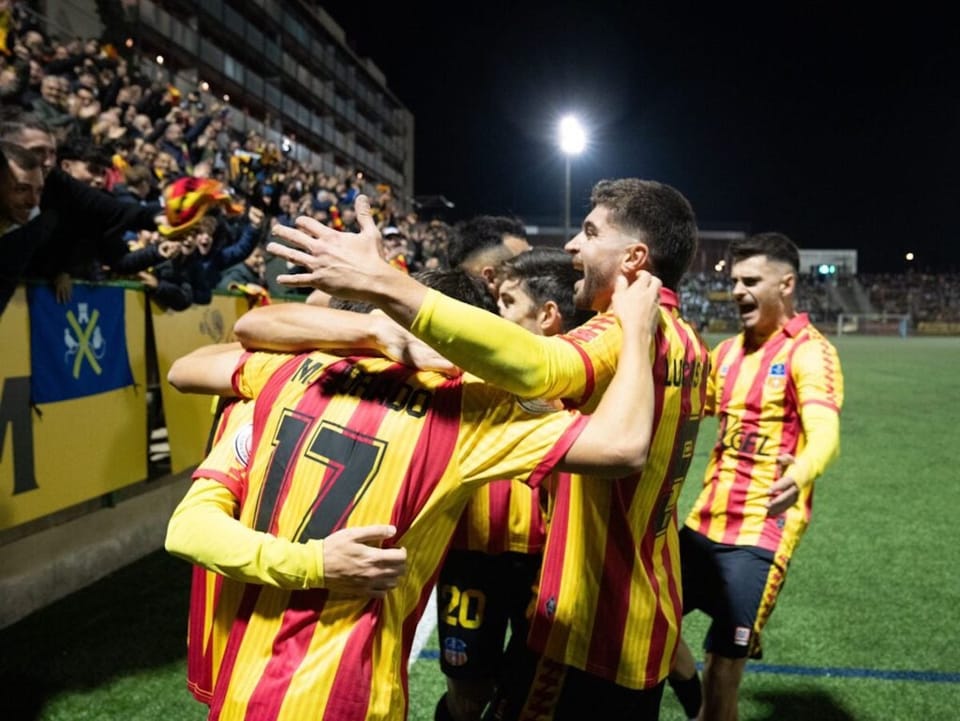
Barcelona City Council urges the Royal Spanish Football Federation (RFEF) to change a rule requiring natural grass for First RFEF league play. This stance leaves two local clubs, UE Sant Andreu and CE Europa, facing uncertainty over their home stadiums. UE Sant Andreu, recently promoted, must convert its artificial pitch at Narcís Sala to natural turf by late August. Otherwise, the club risks not playing at its home ground.
Sports Councillor David Escudé addressed the media four days after UE Sant Andreu's promotion. He highlighted the RFEF regulation's "unjust" and "unsustainable" nature. Both Narcís Sala and CE Europa's Nou Sardenya stadium feature artificial turf. These municipally owned facilities place the responsibility for a solution with the Ajuntament, Barcelona's city council. UE Sant Andreu stated it will not relocate to Can Dragó, currently used by CE Europa. A contractual clause prevents the club from leaving the Sant Andreu district, home to over 200,000 residents. CE Europa, meanwhile, declared that continuing at Can Dragó in the Nou Barris district is "unviable." The club seeks to return to Nou Sardenya. Both clubs assert that playing away from their home stadiums compromises their economic viability.
The Ajuntament's primary focus remains on advocating for a modification to the RFEF's natural grass requirement. Councillor Escudé confirmed discussions with the Generalitat's Sports Councillor, Berni Álvarez. Álvarez shares this perspective. The City Council believes administrative bodies, the Catalan Football Federation, and clubs must collaborate to force this regulatory change. During his press conference, Escudé repeatedly called for "common sense" and "calm." He assured that officials are working to find a comprehensive solution for all teams in Catalonia.
Stadium Conversion Challenges
Converting Narcís Sala to natural turf is relatively straightforward. The stadium had natural grass until 2005. UE Sant Andreu estimates the project would cost 400,000 euros and require two months of work. The situation at Nou Sardenya, located in the Gràcia district, is more complex and expensive. This is due to the presence of a gymnasium and car park beneath the stadium, raising concerns about potential water filtration issues. CE Europa initially played the first half of the season at Nou Sardenya under an RFEF moratorium. However, the club had to move to Can Dragó in the Nou Barris district in January.
Ajuntament's Stance on Turf Rules
Councillor Escudé avoided direct answers regarding specific alternatives for UE Sant Andreu and CE Europa. He stated that officials are handling the matter "seriously" and "with sufficient complicity." He added that the Ajuntament would make an announcement "when the time is right, which is not now." Escudé stressed the importance of unity within Catalan football. He also highlighted the need to reinstate the RFEF's moratorium, which the federation cancelled for the upcoming season. Escudé argued that a six-month moratorium is "unjust." He believes a one-year period is necessary to properly assess cases and devise appropriate solutions.
Broader Vision for City Football
While the Ajuntament has not refused to install natural turf at Narcís Sala or Nou Sardenya, Escudé insists the focus should not be on these specific pitches. Instead, he targets the "unsustainable" RFEF regulation. He argued that natural turf itself is unsustainable from environmental, sporting, and social perspectives. It "expels" youth teams from facilities, he claimed. Escudé affirmed the Ajuntament's commitment to supporting UE Sant Andreu and other city clubs. This includes fostering strong ties between first teams and their neighbourhoods. It also supports the thousands of children involved in local football.
The councillor noted that Barcelona has 28,000 federated players. The city provides approximately 2 million euros in scholarships annually. He also highlighted the City Council's investment of nearly 17 million euros in city football, including grassroots programmes, over the past five years. This figure represents a record investment. As UE Sant Andreu embarks on what Escudé termed "the journey through the desert," the City Council remains confident a resolution will be found. The future of both clubs' home grounds hinges on either a change in RFEF regulations or a significant investment in stadium upgrades. The Ajuntament prioritises a collective approach to address the broader issue.
Come and join our Barcelona English Speakers community on WhatsApp.
Originally published by Tot Barcelona. Read original article.