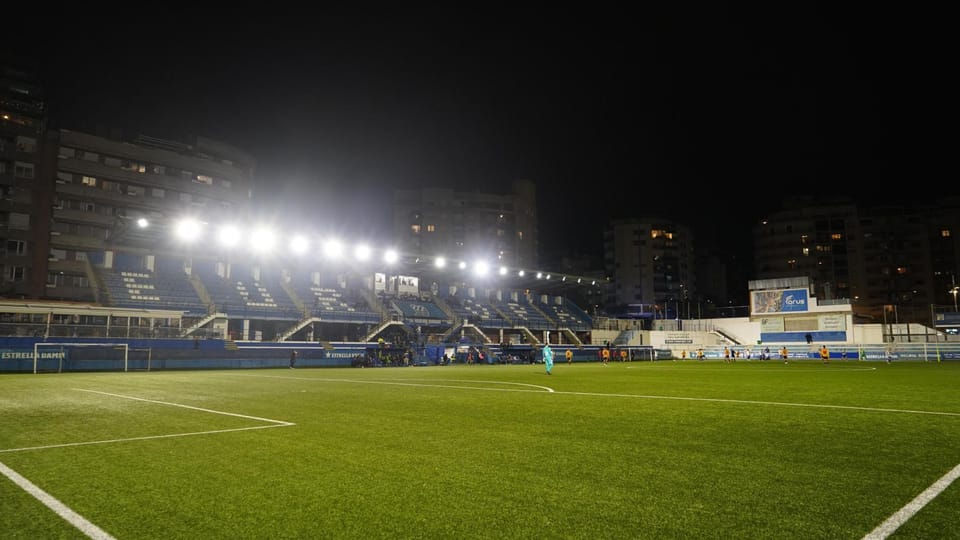
Football club CE Europa has issued a firm ultimatum to Barcelona City Council, demanding an immediate return to their home stadium, Nou Sardenya in Gràcia, for the upcoming season. This follows their outright rejection of a proposal to continue sharing the municipal Can Dragó facility in Nou Barris.
The club's stance, announced in a strong official statement on Wednesday, 22nd April, comes after the Real Federación Española de Fútbol (RFEF) mandated natural grass pitches for all Primera Federación matches. This rule forced CE Europa to relocate mid-season from their artificial turf pitch at Nou Sardenya.
RFEF Rule Sparks Conflict
The Ajuntament de Barcelona, through Sports Councillor David Escudé, had suggested a 'San Siro' style sharing arrangement at Can Dragó. However, CE Europa has now joined UE Sant Andreu in rejecting this plan. A club spokesperson stated, "Continuing at Can Dragó is unviable, and CE Europa's desire and firm will is to return home." They added, "Nou Sardenya is our home. Europa must return home. We will defend our Club, our stadium, and our district until the end."
Financial Strain and Legal Challenge
The club warns that their forced exile has created an "untenable economic cost" which seriously jeopardises their future viability. They are now actively seeking urgent solutions to return to Nou Sardenya for the next season. CE Europa maintains that the RFEF rule is "unjust and disproportionate," and they are challenging it in court. They stated, "In January, we had no choice but to accept the mid-season transfer. However, we cannot continue to accept a model that expels us from our territory and condemns us to economic inviability."
The club is exploring a complex pitch replacement at Nou Sardenya, despite known architectural challenges posed by its underground car park. They seek conditions guaranteeing the club's continuity and sustainability. They have extended a hand to all involved parties to explore solutions.
Sant Andreu's Stance and Logistical Edge
Meanwhile, the UE Sant Andreu also confirmed their promotion and their firm intention to remain at their home ground, Narcís Sala, just 48 hours before Europa's statement. Their management firmly declared, "Can Dragó is too small for us." Unlike CE Europa, Sant Andreu has a logistical advantage. Their Narcís Sala stadium featured natural grass until 2005, making a transition technically and economically more feasible. The club argues that a relocation would halt their social growth.
Athletics Club Disrupted at Can Dragó
The dispute also impacts the Nou Barris Athletics Club, regular users of Can Dragó. They report that temporary adaptations for CE Europa have halted their activities and created physical risks for athletes. Jordi López, a spokesperson for the athletics club, warned, "It is undeniable that the stands are a danger." He highlighted that supplementary stands limit visibility, causing training accidents. They also prevent homologation of throwing areas, just months before the Catalonia Under-20 Championship.
López's club proposes that municipal investment should fund natural grass at Narcís Sala. This would allow Europa and Sant Andreu to share that venue, thereby freeing up the athletics tracks at Can Dragó. All involved parties face pressure to find a swift resolution. The future of two historic Barcelona football clubs and the use of vital community sports facilities hang in the balance.
Sign up for our new entrepreneurs community Bizcelona, now accepting our second wave of applicants.
Originally published by Metrópoli Abierta - Urban Life. Read original article.