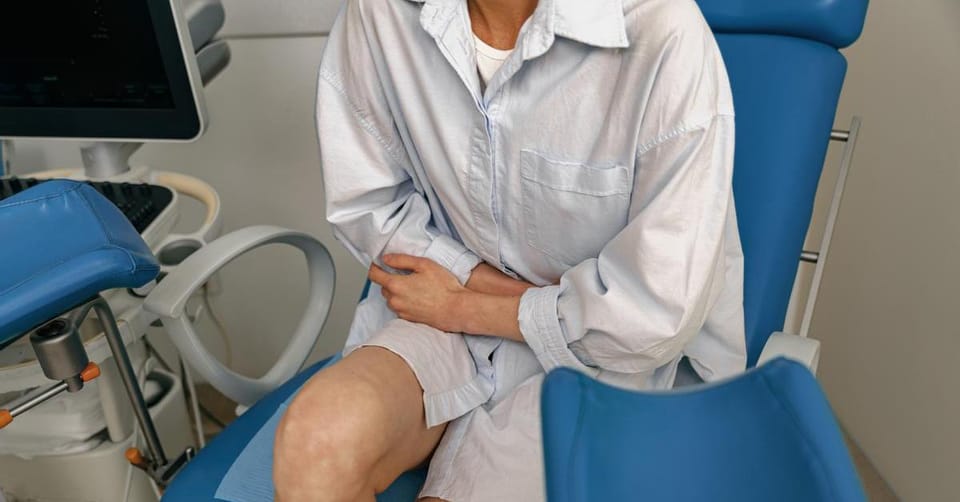
Women in Catalonia often wait nearly a decade to receive an endometriosis diagnosis. This chronic inflammatory condition affects one in ten Catalan women. However, new diagnostic tools and artificial intelligence are now transforming how Barcelona's leading medical institutions approach this previously 'silenced' disease.
This significant delay means many women endure years of severe pain and emotional distress without understanding their condition. Dr. Francisco Carmona, Head of Gynaecology at Hospital Clínic and an international expert, states that calling endometriosis a 'silent disease' is misleading. He argues a gender bias in scientific research has 'silenced' it. Dr. Carmona graphically explains, "If men had testicular pain five days a month, the world would have stopped years ago."
Lorena Martínez Pérez, 44, President of the Association of Women Affected by Endometriosis in Catalonia (Endo&Cat), echoes this sentiment. She recalls, "I have lost count of how many times I heard that the pain I felt was normal or that some women were more sensitive than others." For Martínez Pérez, the core issue is invisibility. "We have lived for years without anyone truly believing us," she adds.
Understanding Endometriosis
Endometriosis occurs when cells, normally confined to the uterus lining, grow outside it. These 'rebel' tissues respond to hormones, growing, inflaming, and bleeding like the uterus. Unlike menstruation, this blood has no exit route. This triggers a chemical storm, causing inflammation and acute pain throughout the body.
The condition is polygenic, meaning multiple genetic variants contribute to a family predisposition. María Luisa Sánchez-Ferrer, a gynaecologist and researcher at Hospital Virgen de la Arrixaca in Murcia, explains the role of genetics and environment. She states, "Having the genes is like having a loaded shotgun, but the environment truly pulls the trigger." Environmental factors, including nutrition, exercise, and exposure to endocrine disruptors in plastics or cosmetics, can activate these genes.
Additionally, the immune system sometimes fails to clear these misplaced cells. In most women, when menstrual tissue flows back into the body, the immune system naturally eliminates it. However, in endometriosis patients, this 'cleaning system' fails. This allows cells to take root and proliferate.
The Impact of Modern Lifestyles
Social changes over recent decades have also contributed to endometriosis becoming more widespread. Women today may experience up to 500 menstrual cycles in their lifetime. This compares to just 40 cycles for their great-grandmothers. A century ago, early pregnancies, large families, and prolonged breastfeeding meant women spent most of their fertile lives without ovulating.
Today, delayed motherhood means the human uterus faces an uninterrupted hormonal bombardment. Evolution did not prepare us for this. This constant bleeding gives the disease biological 'time' to establish itself and distort pelvic anatomy.
Advancements in Non-Invasive Diagnosis
Cutting-edge research at reference units, such as Hospital Clínic, now prioritises early patient profiling. The goal is to offer preventive solutions, like fertility preservation (egg freezing), before the cumulative impact of these 500 menstrual cycles causes irreversible ovarian damage.
Historically, diagnosing endometriosis often required surgery, such as laparoscopy or suction biopsies. This reliance on invasive methods contributed to diagnostic delays and long surgical waiting lists. The new scientific paradigm aims to replace the scalpel with molecular precision. This shifts focus from tissue shape (anatomy) to deciphering proteins (biochemistry).
One new project is DUFIC, a device for 'in vivo' uterine fluid collection. Researcher Analuce Canha Gouveia and Dr. Sánchez-Ferrer lead this initiative. The 'La Caixa' Foundation's CaixaImpulse Innovació programme selected this device. It passively collects uterine fluid using capillarity, similar to sugar absorbing coffee. This method is almost painless. It identifies inflammatory markers much earlier than ultrasound scans can detect lesions.
Beyond uterine fluid, science explores other non-invasive screening methods. Countries like France, Germany, and Switzerland already use saliva tests based on micro-RNA profiles. This 'liquid biopsy' detects the genetic trace of the condition from a minimal sample. Additionally, menstrual blood analysis and blood marker research have appeared in leading scientific journals like Nature Communications.
Precision Medicine and AI Solutions
The latest research aims not only to detect the disease but also to decipher it. Until now, doctors have treated endometriosis uniformly. Science now understands it as a puzzle of different biological entities. Researchers want to replicate oncology's success. Breast cancer, once a single disease, divided into molecular subtypes. Endometriosis now seeks its own 'barcode' classification.
This classification changed cancer treatment three decades ago. It now saves thousands of lives through precision medicine. Researchers use the human endometrial cell atlas, an exhaustive genetic map, to identify disease subtypes based on molecular profiles. Dr. Carmona explains, "It should not only tell us 'you have endometriosis,' but also what type it is: whether it will evolve rapidly or cause infertility."
Identifying these subtypes would also predict the condition's aggressiveness from diagnosis. This molecular prognosis would empower women to plan their lives and motherhood with real data. It would free them from the chronic uncertainty that has marked their medical journey. This advance in precision medicine seeks to end the 'trial and error' method patients currently endure. They often switch between hormonal treatments without knowing which one will work.
Martínez Pérez advocates for this change. She states, "To receive precision medicine, for a doctor to tell you 'you have this subtype and this is the treatment for you,' is a reality that has existed for years in other diseases." For the Endo&Cat President, research progress is a long-overdue debt. "Stopping being guinea pigs is not a luxury; it is the minimum we should have always had for reasons of equity," she asserts.
Hospital Clínic de Barcelona, under Dr. Francisco Carmona, has launched ENDO-HEALTH. This project prevents healthcare system collapse from prolonging diagnostic delays. Supported by 'La Caixa' Foundation and the Ajuntament de Barcelona, ENDO-HEALTH uses artificial intelligence (AI) to transform patient management. Its data technology analyses thousands of profiles to identify patient clusters. These groups comprise women with similar symptoms and biological progressions. This enables digital triage using an AI 'traffic light' system. It ensures specialised medical resources go only to those who truly need them. This includes high-complexity cases needing immediate attention from elite Clínic units, women requiring closer gynaecological specialist monitoring, and stable patients safely followed by primary care or midwives.
These advancements in Barcelona and Catalonia represent a significant shift. They promise faster, more accurate diagnoses and personalised treatments for thousands of women. This new era of precision medicine aims to improve quality of life and empower patients in managing their chronic condition.
Come and join our Barcelona English Speakers community on WhatsApp.
Originally published by Ara Cat. Read original article.