The National Art Museum of Catalonia (MNAC) on Montjuïc will undergo a significant expansion, creating a new urban entrance and a unique connecting gallery. HArquitectes, in association with Swiss studio Christ & Gantenbein, won the design competition for this ambitious project in late 2020. The architects aim to integrate the museum more deeply into the city’s fabric, offering improved access and a distinctive public space.
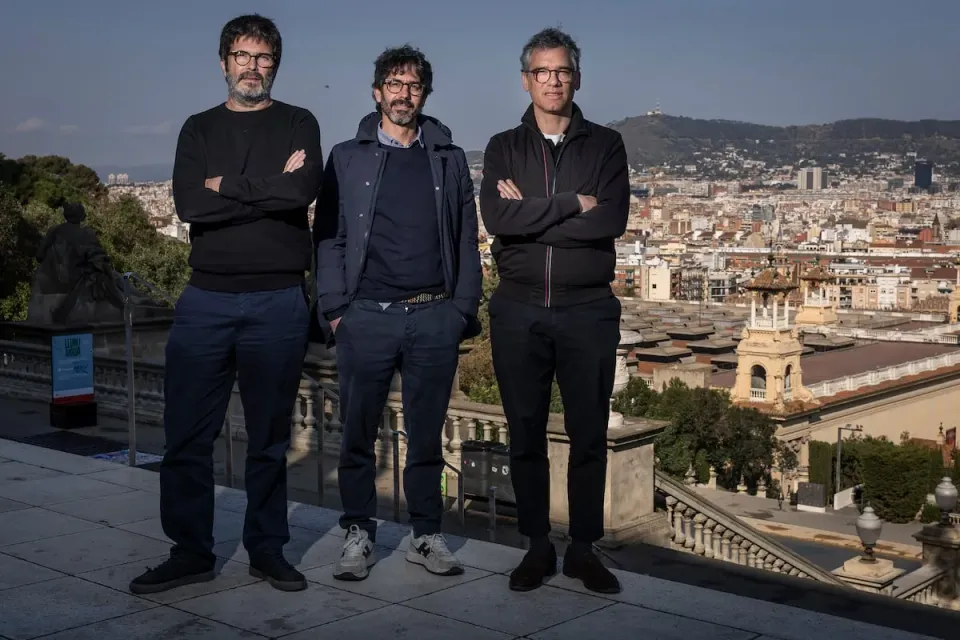
Discussions with three architects from HArquitectes, David Lorente, Josep Ricart, and Roger Tudó, took place in the Palau Nacional’s Oval Room. They highlighted the project’s urban function and its role in formalising Plaça Buïgas. This central plaza will become a platform where three major facilities converge: the expanded MNAC, the German Pavilion, and the new Palau de Congressos.
The expansion will connect the Palau Nacional and the Palau Victòria Eugènia, bridging a 29-metre elevation difference. This connection will create a long, articulated gallery, avoiding a simple tunnel. The project also introduces a new panoramic access point to the MNAC lobby, located at the base of the Palau de Puig i Cadafalch building.
Connecting Montjuïc’s Cultural Hubs
The MNAC expansion effectively comprises three distinct projects. One key element involves constructing a diverse gallery that links the Palau Victòria Eugènia and the Palau Nacional. This gallery will navigate the significant height difference by utilising the mountain’s natural topography. Another major component is the intervention within the Palau Victòria Eugènia, which includes substantial modifications to its internal structure and the creation of a new urban entrance for the museum. Finally, the project encompasses various alterations to the Palau Nacional’s existing spaces, resulting from the overall expansion.
An existing bridge on the north side of the Palau Victòria Eugènia plays a crucial role in the design. The architects incorporated this bridge from the outset, recognising its potential to initiate the long ascending gallery. This large semicircular arch will link the new and old sections of the museum, guiding circulation along the edges of the Palau Victòria Eugènia rather than its centre. The bridge will feature a glazed walkway beneath its arch and a viewing promenade along its upper edge, offering panoramic views.
A Mediterranean Street Experience
The new gallery is designed to be a singular public space, distinct from typical museum corridors or infrastructure. It will receive natural light from multiple sources, including skylights and windows, fostering a connection with the surrounding park’s vegetation. The architects envision this gallery as an ambiguous space, blurring the lines between interior and exterior environments. They aim for the gallery to function “as similar as possible to a Mediterranean street,” both spatially and environmentally.
This design philosophy reflects HArquitectes’ broader interest in raw, stripped-back spaces. They prioritise spaces that are consistent with the building’s structure and possess a timeless quality. Materials like concrete, which offer this possibility, feature prominently in their work. The gallery, which they refer to as the museum’s passage, will visibly showcase these aspects, differentiating it from the white exhibition halls.
HArquitectes’ Vision for Barcelona
HArquitectes also won the competition for the MACBA expansion in late 2020, demonstrating their significant impact on Barcelona’s cultural landscape. While both projects share programmatic similarities, their urban functions differ considerably. The MACBA expansion integrates with the urban space, directly facing the Meier building. Conversely, the MNAC intervention transforms the museum itself into a more urban entity, drawing the institution closer to the city.
The MNAC expansion aligns the museum’s interest in extending towards the city with the Ajuntament’s goal of formalising Plaça Buïgas. This strategic move aims to create a cohesive cultural platform on Montjuïc. The architects’ vision promises to deliver a unique and significant public space, enhancing the visitor experience and further cementing MNAC’s role as a vital cultural landmark in Barcelona.
Come and join our Barcelona English Speakers community on WhatsApp.
Originally published by El País Barcelona. Read original article.