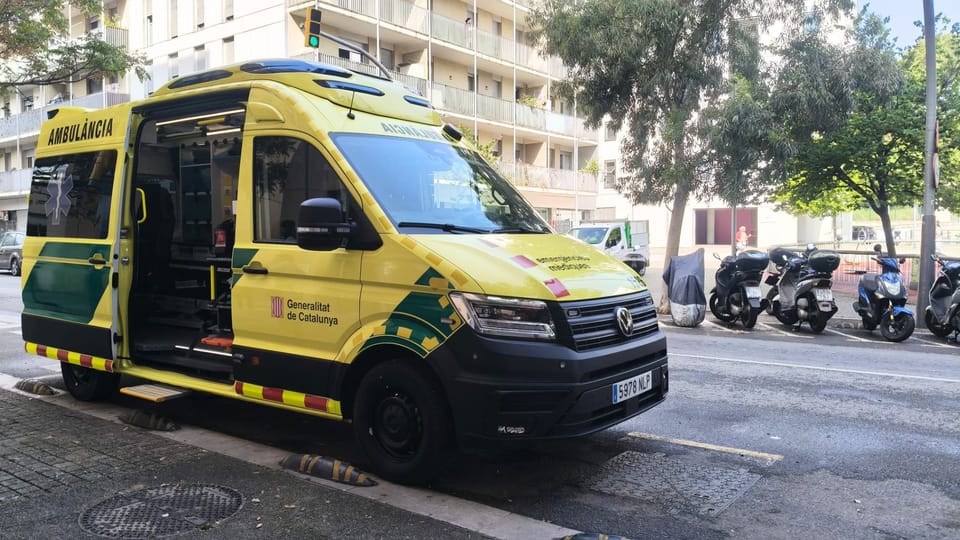
Residents in Barcelona's Zona Nord, specifically Torre Baró, Ciutat Meridiana, and Vallbona, now benefit from a new 24-hour ambulance base. This facility, located in Plaça dels Eucaliptus, Torre Baró, started operations this Wednesday, significantly improving emergency response times for the area.
Improved Emergency Access for Zona Nord
Two basic life support ambulances are stationed at the new base, positioned near the CAP Ciutat Meridiana. While these ambulances will also serve other parts of Barcelona when necessary, the plan ensures at least one remains at the base. This guarantees rapid assistance for local residents, a critical improvement after years of persistent community demands.
Filiberto Bravo from the Ciutat Meridiana Neighbourhood Association expressed profound relief. "It is a milestone, even if many do not believe it, that gives us security," Bravo stated. "We are far from everything, and sometimes, when the ambulance arrived, it was already too late." This sentiment reflects a long-standing struggle for better emergency provision in the district.
Years of Community Advocacy
The establishment of this base follows an agreement between the Nou Barris district council and the Generalitat. Additionally, the Ajuntament funded the conditioning of the auxiliary and logistics premises. These facilities are situated directly opposite the ambulance access point, ensuring operational efficiency. Although the premises were ready some time ago, the process extended until now. This timing coincides with the broader deployment of new Sistema d'Emergències Mèdiques (SEM) ambulances across Barcelona.
This new base directly addresses a long-standing problem rooted in the unique geography and urban planning of the three neighbourhoods. Torre Baró, Ciutat Meridiana, and Vallbona are physically separated from the rest of Barcelona. Motorways, train lines, and the Collserola mountain range create this isolation.
Overcoming Geographical and Urban Challenges
The area's complex street layout further complicates emergency responses. Streets often intertwine, and complicated block numbering makes locating specific addresses difficult. This urban design frequently caused ambulances to take longer to arrive. In some cases, emergency vehicles even got lost, delaying critical care. Valeria Ortiz from the Torre Baró Neighbourhood Association highlighted these specific challenges. "In Ciutat Meridiana they have many block interiors, Torre Baró is mountainous, and Vallbona is on the other side of the bridge," Ortiz explained. "The base can help them get to the hospital quickly, and that saves lives."
Addressing Economic Barriers to Healthcare
Residents also consistently raised economic concerns as a barrier to healthcare access. For many, especially during night-time emergencies, driving directly to a hospital is not an option. They may not own a car or cannot afford a taxi fare, which can be substantial. The Zona Nord is not a common area for taxis, leading to long waiting times if one is requested. This lack of accessible transport options exacerbates emergency situations.
Filiberto Bravo added, "At night, we do not have any taxi or vehicle in the neighbourhood to take us to Vall d'Hebron." Valeria Ortiz further noted the communication difficulties. "Depending on the location, we do not even have coverage to call a taxi. However, we can always call 112." This highlights the critical role of public emergency services in the area.
This new ambulance base marks a significant victory for residents who have campaigned for improved services for many months. Their ongoing advocacy also includes calls for more staff and better facilities at the CAP Ciutat Meridiana. The base represents a concrete step towards enhancing public health and safety in a historically underserved area of Barcelona.
Come and join our Barcelona English Speakers community on WhatsApp.
Originally published by betevé. Read original article.