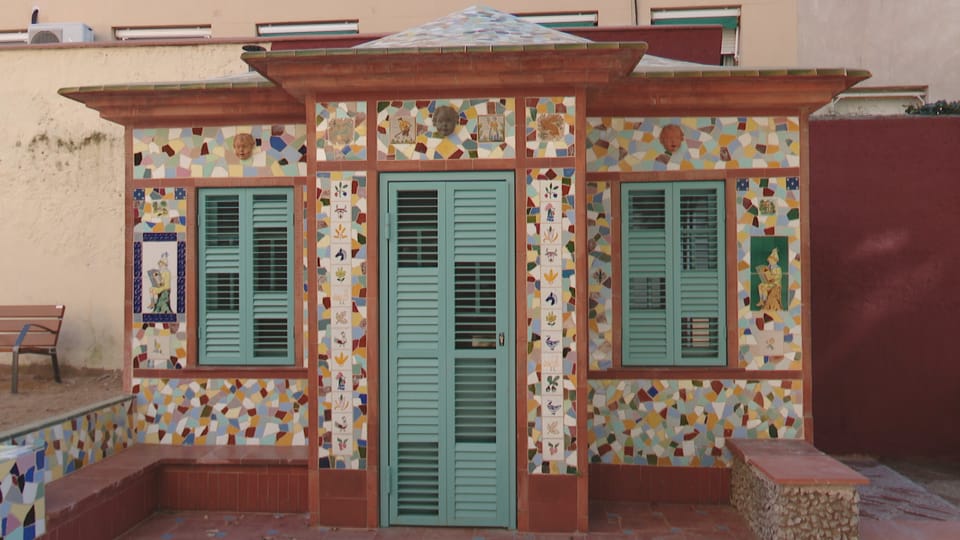
Barcelona City Council has completed a €40,000 restoration of the unique Modernist-inspired doll's house in the Putxet neighbourhood. This miniature architectural gem, nearly 12 square metres in size, will now open to the public on specific occasions.
The rehabilitation project addressed significant humidity issues and involved meticulous repairs, including the replacement of a damaged cherub on the façade. Local residents had previously campaigned vigorously to save the structure from demolition after it suffered repeated vandalism over the years. Jordi Planelles, an architect and co-director of the restoration works, explained its unique design. "Because he was a builder, he took advantage of the resources he had and designed it in a singular way: he made it in the image of the first house here, the main Modernist house on the estate from 1903," Planelles stated.
The family patriarch, a builder, constructed the doll's house in the mid-1950s for his children, the affluent Guinovart Coma family. They resided on the estate for a decade. Its design incorporated ceramic tiles from various periods, including Modernist-era tiles depicting the German fairy tale Hänsel and Gretel, which was very popular in the early 20th century. Workers also used tiles from the 1930s and later, alongside the traditional Catalan trencadís technique, a mosaic style made from broken tile shards.
A Fully Functional Miniature Home
The structure boasts multiple rooms, meticulously crafted to mimic a full-sized residence. It features a fully functional "economic kitchen" designed for wood fires, complete with a chimney for smoke extraction. The impressive bathroom included a bathtub, toilet, and sink, all connected with running water pipes. This level of detail made it a truly unique construction within the family's garden. It stood just metres from the main Modernist tower, located between Ferran Puig and La Costa streets in the Putxet neighbourhood.
Meticulous Restoration Efforts
The City Council acquired the doll's house and its surrounding land in 2006, recognising its historical and architectural value. The recent €40,000 investment specifically targeted the repair of long-standing humidity problems. Additionally, workers installed new shutters, which now offer tantalising glimpses into the house's charming interior. Workers also carefully replaced a damaged cherub on the façade. A skilled ceramist meticulously recreated lost tiles, ensuring they matched the original pieces using identical techniques. Planelles highlighted the restoration philosophy. "If you look closely, some have relief, which are the originals, and some do not, which are the new ones we have made," he noted. "Although the image we wanted to give is of a complete, unrestored work, as it was originally, we also wanted closer inspection to identify the new and original pieces." The only remaining task is the installation of period-appropriate miniature furniture, which officials expect to complete soon.
A Rare Example of Catalan Architecture
While children's playhouses are more common in Anglo-Saxon countries, examples built with masonry and trencadís are exceedingly rare in Catalonia. Barcelona itself features only two visible examples of this unique architectural style. The Putxet doll's house, now 70 years old, stands as one of these rare treasures. They constructed the other notable example on Passeig de Sant Gervasi for the royal children of Queen Regent Maria Cristina. They used it for a mere two weeks during their stay at the Castanyer family estate. This occurred during the grand celebration of the 1888 Barcelona Universal Exposition. That particular structure now serves as an office for an estate agency, highlighting the distinct fate of the Putxet house. Its preservation offers a rare glimpse into a unique architectural tradition and a piece of Barcelona's social history.
The limited public access means residents and visitors will need to closely monitor municipal announcements for specific opening dates. This careful approach aims to preserve the delicate structure for future generations. It also allows occasional enjoyment of this distinctive piece of Barcelona's architectural heritage, ensuring its legacy endures.
Sign up for our new entrepreneurs community Bizcelona, now accepting our second wave of applicants.
Originally published by betevé. Read original article.