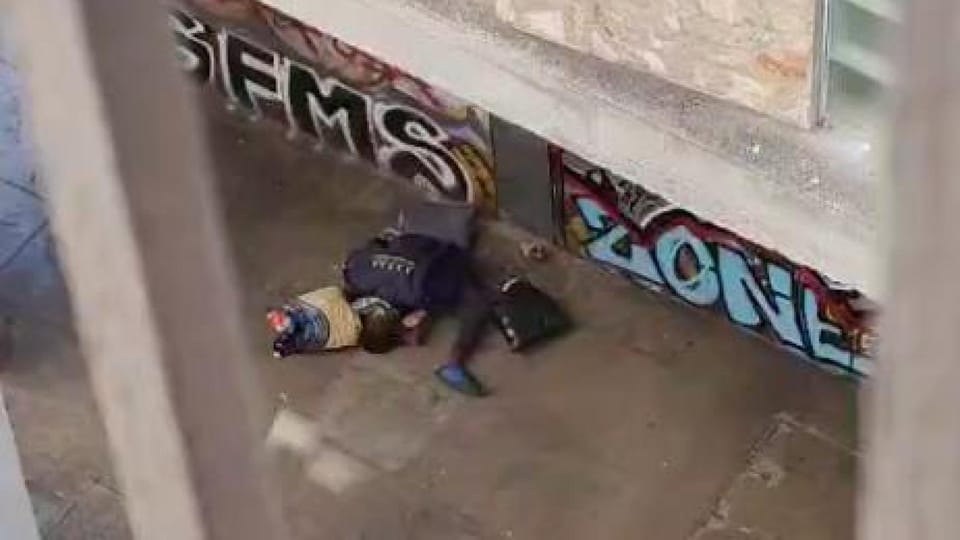
Residents of Carrer de l'Est in Barcelona's Raval district describe their street as a nightly "war zone", enduring 18 months of escalating drug use, violence, and extreme unsanitary conditions. They report feeling abandoned by authorities, despite the street's central location near Drassanes and La Rambla.
The street's atmosphere changes dramatically each evening, residents told Metrópoli Abierta. This shift coincides with the operating hours of nearby assistance centres. "From 20:00, the street transforms," one resident explained, referring to drug users who gather daily near the Baluard Assistance Centre.
These individuals "start arriving, settling in the arcades, and taking drugs in full view of everyone," the resident added. What begins as a gathering often escalates into violent conflicts. The past week proved particularly difficult for residents.
"We could not sleep," residents lamented. "Shouting at 02:00, 03:00, and 00:04. If they are not fighting, it is due to drug-induced paranoia. They spend hours screaming in the middle of the street." Physical violence has become a constant presence.
This week alone, incidents involving knives and bottle attacks to the head prompted emergency services to intervene. The Raval district, part of Ciutat Vella, faces ongoing challenges with street drug dealing. This situation often moves from official drug consumption rooms to open street sales.
Extreme Unsanitary Conditions
The street has become a public urinal and dumping ground. This causes significant outrage among the community. "Our building's cleaner is afraid every morning," residents reported. "She has to clean human faeces, not dog faeces, left in the doorway."
Municipal cleaning staff also express frustration to residents. They must deal with human excrement removal daily. The street's design also makes these hygiene problems worse.
Rubbish containers, built into wall recesses, are systematically used as improvised toilets. The smell of urine is "insufferable," residents claim. Poor lighting in some sections worsens this situation. It creates dark corners where impunity thrives.
Fear Traps Residents Indoors
The psychological impact on residents is clear. "Young women are terrified to go out at night," residents stated. "They cannot walk past these groups because, if you say anything, they respond aggressively."
The elderly face an even greater struggle. "We see older people looking out of their windows who never go down to the street anymore," residents observed. "They are afraid to leave their own homes."
Perceived Institutional Abandonment
Residents qualified the administrations' response as "disheartening." They have sent numerous complaints to the Barcelona City Council. The only official reply states "there are not sufficient means."
Police officers, residents say, advise them to collect signatures. Officers also confess their own frustration. "Sometimes they arrest someone for hitting another person with a bottle," residents quoted police as saying. "Two days later, they are back on the same corner."
This feeling of helplessness extends to serious threats. Even when residents report weapons, police intervention often remains minimal. "They take the knife," residents explained, "but leave the man right there."
Architectural Challenges and Blocked Solutions
Residents point to specific "blind spots" in the street's architecture. These include recesses and blind windows belonging to the Gavina Foundation. These spaces provide shelter for groups.
Residents have tried contacting the foundation. They proposed deterrent solutions, such as installing planters or enclosures. These measures would prevent groups from settling in these entrances.
"We spoke to them by phone and sent emails," residents said. "But they say they cannot do anything; it must be a City Council matter." Confusion over ownership or concession of these spaces blocks physical improvements.
Meanwhile, groups use these hidden spots to "settle" for hours. Residents of Carrer de l'Est do not demand exceptional measures. They simply ask for basic coexistence rules to be enforced.
"We only ask for a patrol to pass at night, at 21:00 or 22:00," residents pleaded. "They should tell them they cannot stay there." Police do accompany cleaning services in the morning to move sleepers.
However, at night, during the violence and drug use, the street becomes a "no man's land." Some residents confess, "We are renting, and as soon as we can, we will leave here, even though the market in Barcelona is horrible." This sentiment reflects many others who feel the Raval is pushing out residents in favour of marginalisation.
Come and join our Barcelona English Speakers community on WhatsApp.
Originally published by Metrópoli Abierta - Urban Life. Read original article.