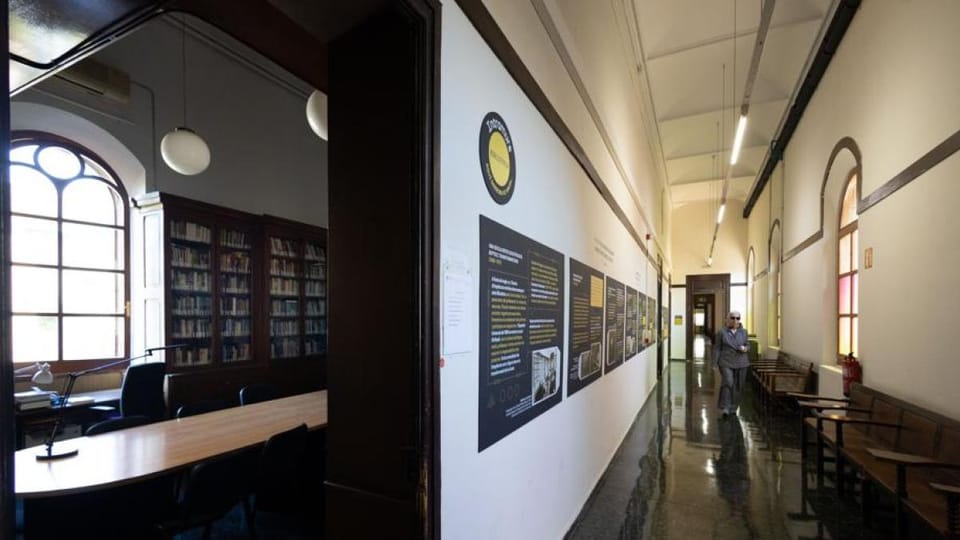
The University of Barcelona (UB) has launched a new exhibition, "Intramurs. The Cradle of Modern Architecture in Catalonia (1872-1962)". This free display is inside its Historic Building. It highlights the site's critical role in shaping Barcelona's iconic architecture. The exhibition explores nearly a century of architectural education within the very halls where figures like Antoni Gaudí once studied.
Visitors can explore the exhibition, freely accessible until late 2026, on the second floor of the Pati de Lletres. The UB's Historic Building hosts the display Monday to Friday, from 09:00 to 21:00. Marcelino Jiménez León, a UB professor and the exhibition's curator, explained its unique setting to La Vanguardia. "We are immersed in the space we are talking about," he stated. "The container is the content." This means visitors walk through the exact locations where influential architects trained.
Tracing Barcelona's Architectural Roots
The exhibition traces almost a century of architectural teaching. It starts from the School of Architecture's founding in 1871. Elies Rogent, who also designed the Historic Building, directed the school initially. The display covers the period until the school moved to the Diagonal campus in 1962. During these years, the centre formed generations of architects who transformed Barcelona. These include Antoni Gaudí, Lluís Domènech i Montaner, and Josep Puig i Cadafalch. These individuals became key figures in Catalan Modernism. The research behind the exhibition helped locate fundamental spaces of the old school. These include the director's office, the library, and the staff meeting room. "Now we know where Gaudí or Domènech i Montaner studied," Jiménez León noted. He added, "We know where they debated the Barcelona we know today."
An Immersive Historical Journey
The exhibition's placement is one of its most unique elements. It unfolds in the same corridors where architecture studies took place for almost 100 years. This makes the visit an immersive experience for attendees. These spaces now serve as offices or work areas. Historical photographs, plans, and explanatory panels show them as they once were. The exhibition presents the School of Architecture's history alongside Barcelona's urban development. Between the late 19th century and the first half of the 20th century, the city underwent its deepest transformation. This included the expansion of the Eixample district, home to 260,000 residents. Major urban projects linked to the 1888 and 1929 Universal Exhibitions also occurred. "Between 1872 and 1962, Barcelona experienced its most radical transformation," Jiménez León affirmed. "Who made it? Architects. Where did they train? Here. That is why we speak of the cradle of modern architecture."
Influential Figures and Urban Evolution
The exhibition also covers various historical moments that shaped the school's evolution. It moves from the rise of Modernism to the rationalist shift of GATCPAC. GATCPAC, the Group of Catalan Architects and Technicians for the Progress of Contemporary Architecture, advocated for modern design. The impact of the Spanish Civil War and post-war urban challenges are also addressed. The display shows how academic decisions and debates in these spaces influenced the city's growth. They also defined its architectural identity. One section focuses on prominent figures linked to the school. Alongside the great names of Modernism, the exhibition includes architect Josep Lluís Sert. Sert represented GATCPAC and 20th-century modernisation. It also features Mercè Serra Barenys, the first woman to graduate in architecture in Catalonia in 1964.
Recognising Women in Architecture
Jiménez León explained that including Serra Barenys broadens the historical narrative. "We also wanted to recognise the role of women in a traditionally male profession," he said. Serra Barenys was the only woman in her graduating class. Her career marked a turning point for women entering architecture studies. The exhibition also reminds visitors that the first women enrolled in architecture in Barcelona in 1911. However, they did not complete their studies. Serra Barenys's figure symbolises the completion of an academic and social opening process. The exhibition has four main sections. These cover the school's origins, its historical evolution in the Historic Building, and a selection of notable figures. A timeline connects academic history with events in Barcelona, Catalonia, and the world.
Connecting Past Knowledge to Present City
Panels with documents, plans, and photographs reconstruct academic life and original spaces. The exhibition's design uses light and colour to evoke Modernism's visual world. Jiménez León aims to bring this legacy closer to the public. "A country needs to know its origin and where its transformation came from," he stated. The exhibition asserts the UB's Historic Building as a key place in knowledge construction. It was the setting where much of modern Catalan architecture developed. "The exhibition is also a reflection on the transmission of knowledge," Jiménez León added. Antoni Gaudí once said, "Originality consists of returning to the origin." The curator concluded, "Everything came from here. This place is the origin of modern Barcelona, and we wanted to return that history to the citizens." A virtual visit is also available on the University of Barcelona's website.
The "Intramurs. The Cradle of Modern Architecture in Catalonia (1872-1962)" exhibition will remain open until late 2026. Visitors can explore this significant display for free at the University of Barcelona's Historic Building.
Come and join our Barcelona English Speakers community on WhatsApp.
Originally published by La Vanguardia Barcelona. Read original article.