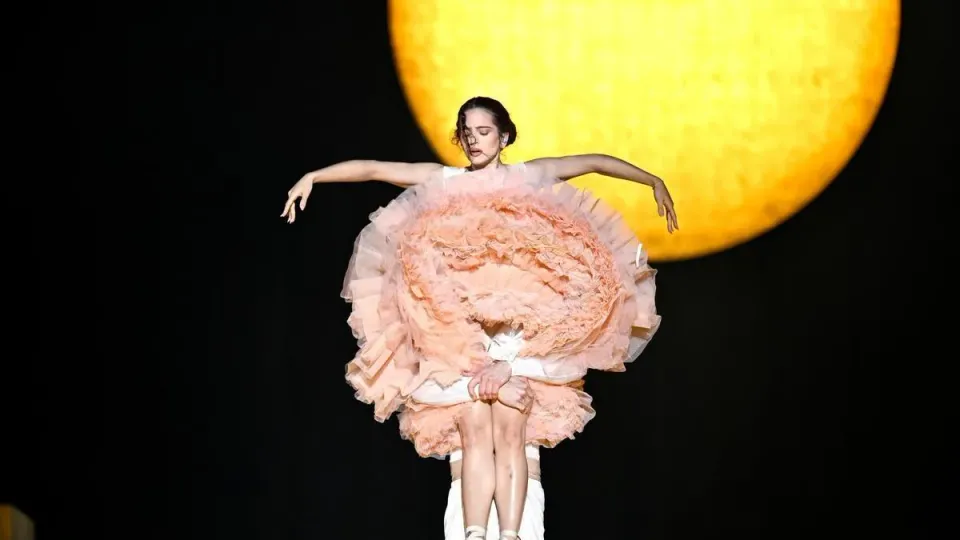
Global music sensation Rosalía has established her recording studio and production offices in L’Hospitalet de Llobregat, Catalonia’s second-largest city. This significant arrival coincides with the departure of Cirque du Soleil, marking a new era for the city’s expanding Cultural District.
Rosalía Establishes Presence in L’Hospitalet
The internationally acclaimed artist has chosen an area near L’Hospitalet’s Fira Gran Via exhibition centre for her new musical recording studio. Additionally, the offices for Racinetas Productions SL, her event and spectacle production company, will be located there. Racinetas Productions SL is a wholly-owned subsidiary of Motomami SL, the family company Rosalía, her mother, and sister established in 2019 to manage the administrative aspects of her career. Sources from L’Hospitalet City Council expressed pride in this development. They stated, “For us, it is always a source of pride and satisfaction to see artists continue to choose L’Hospitalet, whether they are small emerging artists or major names like Rosalía.”
Cirque du Soleil Concludes Decade-Long Residency
Rosalía’s arrival follows the conclusion of Cirque du Soleil’s decade-long presence in L’Hospitalet. The renowned circus company had maintained its headquarters in the municipality and staged performances every two years. Although an initial agreement considered their residency until 2030, the City Council recently ended its contractual relationship with the company. Mayor David Quirós announced in a recent municipal plenary session, “Once their performance concludes this year, Cirque du Soleil will not return to the city.” Municipal sources indicated that the decision allows the city to recover the space, which often remained unused between the company’s activities. Government Councillor José Antonio Alcaide affirmed the objective is to “recover the space for the development of facilities the city needs.”
Evolution of L’Hospitalet’s Cultural District
The Cultural District of L’Hospitalet began a decade ago when then-Mayor Núria Marín presented the initiative in Brooklyn. Initially confined to the Mig industrial estate, the district has since expanded across the city. It now boasts over 500 cultural agents and more than 30 cultural facilities. Many artists and companies initially moved to L’Hospitalet after being priced out of Barcelona’s increasingly expensive rental market. They found refuge in L’Hospitalet’s disused industrial buildings, adapting them for their needs, alongside more affordable rents. Notable names working in the city include sculptor Miquel Aparici, galleries such as Ana Mas Projects and etHall, and the Argentine-Japanese artistic duo Lolo & Sosaku.
Connecting Artists and Community
City Council sources highlight that a major success of the project involves connecting these diverse cultural agents with the local community. They organised events for artists to network and provided city exhibition spaces. Additionally, they encouraged projects to engage with local initiatives, such as collaborations with schools. David Lafuente, co-founder and director of the iconic Sala Salamandra in L’Hospitalet, has supported the Cultural District from its inception. Lafuente remarked, “I believe it is a project with ‘momentum’. Barcelona cannot grow further, and L’Hospitalet maintains a geostrategic sense. Barcelona already has spaces in Poblenou to the north; it makes sense for a cultural district to exist to the south, next to the airport.”
Addressing Challenges and Future Growth
Despite its successes, the Cultural District faces ongoing challenges. Lafuente noted the absence of a “global plan involving all areas of the city council and even other administrations.” He also criticised the slow pace of bureaucracy, citing the Village Underground project as an example. This cultural creation space announced its intention to establish its third European headquarters in L’Hospitalet eight years ago, with an initial target of 2019, but is now expected in 2026. Municipal sources acknowledge that overcoming regulatory hurdles for new initiatives remains a primary difficulty, which they aim to address through inter-departmental collaboration.
Elisabet Parés, a cultural manager and key figure in connecting local artists, identifies gentrification as a significant challenge. She notes that rising rents, with spaces doubling from 600 euros to 1,200 euros in two years, threaten to displace early adopters. Parés advocates for more robust cultural policies at the Catalan level, arguing that the sector is an economic driver and integral to Catalan identity, not a precarious one. She calls for increased subsidies and streamlined processes to help projects establish themselves. The City Council acknowledges the concern regarding gentrification, which they say has “hovered” over the project from its start. They aim to foster a sense of rootedness among cultural agents and develop a strong artistic community. They believe the arrival of major artists like Rosalía demonstrates L’Hospitalet’s suitability as an “optimal space” for cultural proposals, both large and small, reinforcing the district’s potential for continued development.
Sign up for our new entrepreneurs community Bizcelona, now accepting our second wave of applicants.
Originally published by El Periódico Barcelona. Read original article.