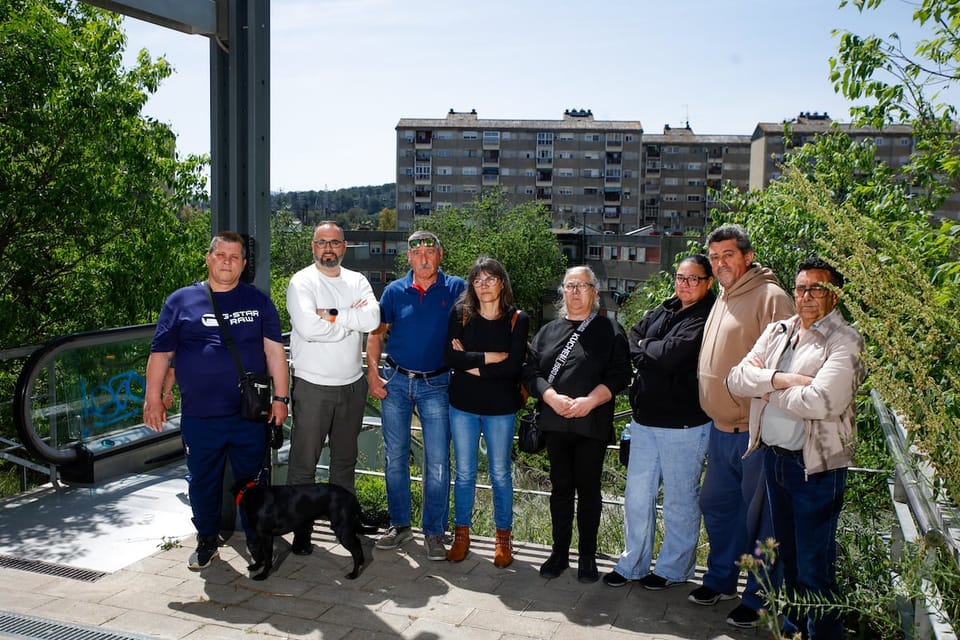
The Catalan government has reversed a decision to liberalise 1,216 social housing units in Badia del Vallès. This town, home to 13,000 residents, lies 12 kilometres from Barcelona. The move sparked widespread anger among homeowners. They expected to sell their properties at market value.
This abrupt change came a month before the planned liberalisation in February 2026. It keeps the homes under protected status. Officials designated the area a "tensioned housing zone." This decision affects the remaining 25% of the town's social housing (VPO) units. Around 75% of Badia del Vallès's 5,400 flats, built in 190 blocks, transitioned to the free market in 2023. Residents now feel divided by the new policy.
"It makes no sense that my flat remains social housing while my father's, in the block opposite, does not," complained Amalia Frutos. She co-founded a platform for affected residents with Dorian Ros. "They have divided us into first and second-class citizens."
A History of Housing Struggles
Badia del Vallès was originally planned in the 1960s by the Francoist Housing Institute. It was designed exclusively for social housing to address Barcelona's housing crisis. The town recently celebrated 50 years since its first residents arrived. José Montero, who moved to Badia at 20, expressed his frustration.
"I have fulfilled my part of a contract signed before a notary," Montero stated. He and his wife, Rafaela Expósito, do not wish to leave the town. However, they question why some neighbours received exemptions from social housing status while others did not. The town's unique street layout mirrors the Iberian Peninsula. It features streets like Avenida del Cantábrico and Calle de la Bética. Affected homes are often described by residents as "those facing the sea." This refers to blocks on Avenida Mediterránea or Calle Ibiza.
Genaro Álvarez, who arrived in 1976, bought his flat in 2004. He protests the decision. "They treat us like speculators," Álvarez said. Despite all flats initially being protected, the 2008 financial crisis severely impacted Badia del Vallès. Álvarez recounted how his flat was registered for 64,000 euros, its VPO value. Caixa Catalunya provided a mortgage for this amount. Simultaneously, they granted him a personal loan for an additional 116,000 euros requested by the seller. This left him with monthly payments of 1,100 euros.
Irregular Mortgage Practices
Such irregular practices were common in Badia del Vallès. "Everyone knew that was happening," Álvarez claimed. These issues came to light when the housing bubble burst. Badia del Vallès, one of Catalonia's lowest per capita income municipalities, saw unemployment soar. Many buyers could not repay their loans. Álvarez, a former member of the Platform for Mortgage Victims (PAH), fought to save his home.
"Many evictions happened here," Álvarez added. "Banks took flats, and investment funds acquired loans. I stood against them, and I will not tolerate being treated as a speculator." Residents are now preparing for another fight. They have started discussions with parliamentary groups. The central government has decided that communities will only receive new housing plan funds if social housing status is permanent.
Mayor Seeks Solutions
Dorian Ros acknowledged this policy. "I can agree with that, because the rules are clear from the start," Ros said. "But this measure works against us, taken retroactively." Josep Martínez Valencia, the Mayor of Badia del Vallès (Socialists' Party of Catalonia, PSC), admitted the inconsistency. "It is incongruent that, on the same street, one block enters the free market and another does not," he stated.
He affirmed that achieving "equality for all residents" is his "priority" and "biggest challenge." The mayor explained that the majority of homes lost their protected status in 2023. The remaining units will stay protected temporarily because it is a tensioned market. "It is not an indefinite measure," Martínez Valencia said. "But it does open a debate about the right to housing versus the right to property." He is working with the Housing Secretariat to find a solution. He suggested that Badia del Vallès might cease to be a tensioned zone. However, he first needs mechanisms to protect citizens from speculation. "I will find the solution, I am sure, I am obsessed with it," he insisted.
Market Impact and Resident Concerns
So far, speculation has not significantly affected the town. On Avenida de Burgos, the main street, three estate agencies advertise flats for 150,000 to 175,000 euros. Estate agents report rising prices, similar to surrounding municipalities. However, prices have not changed drastically since the first homes were liberalised in 2023. This is partly because the Catalan government's valuations for social housing often exceed 200,000 euros, which is above the current market price.
For residents, this makes the government's decision even more puzzling. "The problem is all the bureaucracy involved in selling," Ros pointed out. "Many owners are elderly people who might need the money to pay for a care home they cannot afford." Manuel Hinojosa, another affected resident, expressed his frustration. "It seems they wanted to get housing from wherever they could," Hinojosa said. "I am not moving from Badia, I have no interest. But it bothers me that they say they do it to stop speculation. We simply do not deserve it." Badia del Vallès is the most prominent case, but residents have contacted others affected in L'Hospitalet de Llobregat and Poblenou in Barcelona.
Sign up for our new entrepreneurs community Bizcelona, now accepting our second wave of applicants.
Originally published by El País Barcelona. Read original article.