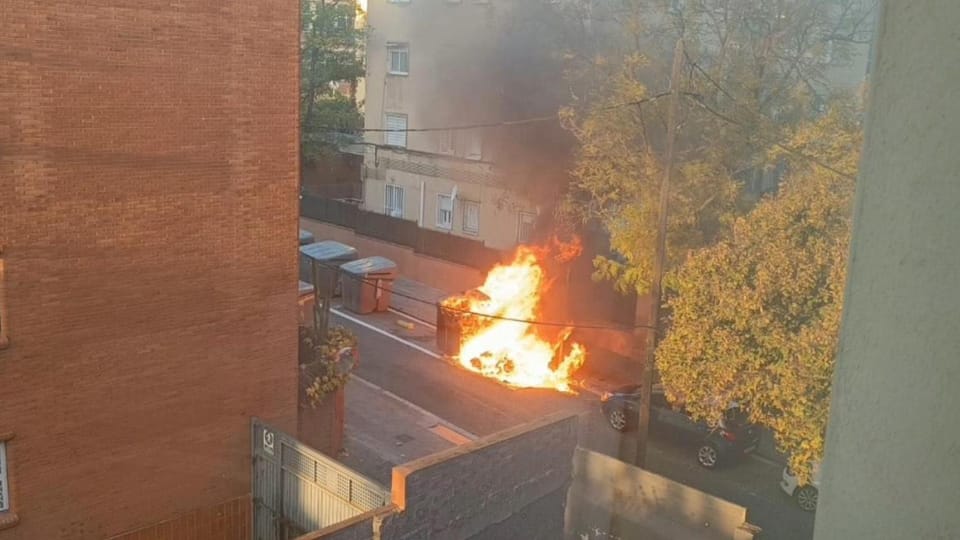
Residents of Barcelona's Nou Barris district report a significant deterioration in local security, citing increased crime and public nuisance. This contrasts sharply with official figures from the Barcelona City Council (Ajuntament), which indicate a decrease in reported offences. The discrepancy highlights growing tension between community experience and municipal data in the northern district.
Community sources told Metrópoli that the situation has worsened considerably. "We are not in the same situation as before, we are much worse, the day centre remains the same and there are more and more people causing problems," residents stated. They point to a rise in robberies, violence, and the public use of nitrous oxide, often called "laughing gas."
The Centre de Primera Acogida (CPA) on Marie Curie Street supports vulnerable individuals. It remains a focal point of resident concern. Some residents claim certain individuals associated with the centre disrupt local coexistence.
Residents have protested a surge in crime, even as authorities dismantle illegal settlements. One such settlement was previously located near Karl Marx Square, bordering Horta-Guinardó. They describe police protection as "minimal."
One resident reported an attack in the central square, where assailants used the "mataleón" technique, a chokehold often employed in robberies. "More and more things are happening," they added. Many individuals, while not camping, remain "scattered on the streets all day," relieving themselves in public, which residents find "very annoying."
Conflicting Data on Crime Rates
The Ajuntament, however, presents a different picture. Municipal sources informed Metrópoli about data from the Local Security Board. This data shows a 3.5% reduction in crimes in the district compared to the previous year.
Additionally, municipal services confirm a "significant reduction" in people present in public spaces. Numbers now range between 9 and 13 individuals. This is less than half the number detected a few months ago.
Despite these official figures, residents continue to report serious public nuisance issues. Incidents include the burning of waste containers near Alcúdia Street. "The Ajuntament no longer has any more, given how much they cost to replace," residents explained.
They also noted that a paper recycling container has been missing for one and a half months. Residents describe "many fights in doorways," creating an "unbearable fear" among neighbours. One resident, who lives on Pi i Ferrer Street, stated, "I bought a flat because my parents lived here all their lives, and I have never seen this."
New Management at the CPA
The Barcelona City Council highlights improvements at the Centre de Primera Acogida. Since 1st November, the CPA operates under new management, incorporating "substantial improvements." These include extended day centre hours and a continuous hygiene service available seven days a week.
The centre has also increased its community intervention professionals. It now offers more personalised support focused on autonomy processes. The council's objective is "to improve user care and reduce impact on public space, promoting better coexistence dynamics in the environment."
Police Presence and Community Discontent
Residents, however, insist that the situation on the streets "has not improved." They claim not to have noticed the implementation of a new police patrol, despite being informed of it. Another resident expressed fear about walking alone.
"My parking is near that area and I go with a lot of fear; before I would return at dawn and now I can't bear to go out when the sun sets, it's hell," the resident added. The Ajuntament confirms a "significantly reinforced nocturnal police presence across the city with a 78% increase in agents." In Nou Barris, "specific coverage within the Operational Night Units" continues.
"Becoming a Ghetto"
The ongoing issues make rest "practically impossible" in streets bordering the CPA. Affected residents feel their district is "becoming a ghetto." They perceive that individuals "come to commit crimes at will."
This sentiment clashes with the district's previous reputation for tranquility. Residents also point to a "broader outbreak" of delinquency, suggesting that new discotheques, such as Enigma in the Porta neighbourhood, contribute to "incivility" rather than easing tensions. The disconnect between official data and the daily experiences of Nou Barris residents remains a significant challenge for the community and local authorities.
Sign up for our new entrepreneurs community Bizcelona, now accepting our second wave of applicants.
Originally published by Metrópoli Abierta - Urban Life. Read original article.