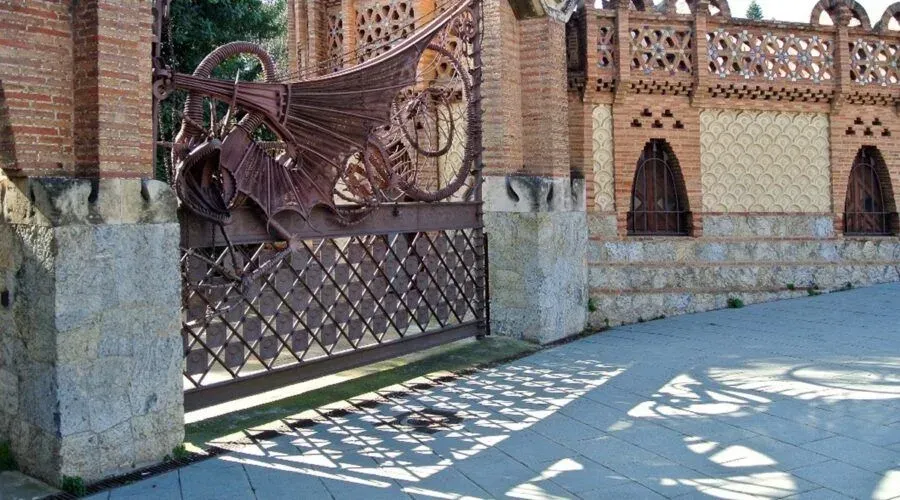
Barcelona City Council and the University of Barcelona (UB) will restore Antoni Gaudí’s iconic Dragon Gate, the extraordinary wrought-iron entrance to the Güell Estate Pavilions in the Les Corts district. This significant architectural project is set to begin this year and conclude before the end of 2027, preserving a key piece of the city’s rich heritage for residents and visitors alike.
Funding and Scope of the Restoration
The City Council will provide a grant of €116,000 to the University of Barcelona. This amount covers just over half of the total restoration budget, which stands precisely at €202,877.68. The World Monument Fund, an international organisation collaborating with the UB since 2014, will finance the remaining costs. In 2014, the Güell Estate Pavilions gained inclusion in the World Monument Fund’s Watch programme. This prestigious programme actively promotes the restoration and conservation of global architectural and cultural heritage deemed at risk. The inclusion highlighted the urgent need for preservation at this site.
The restoration work, based on a project presented by the Municipal Institute of Urban Landscape and Quality of Life, extends beyond the intricate wrought-iron gate itself. Workers will also reform the adjacent parts that frame the entrance. This comprehensive approach includes the distinctive orange tree crowning the right side, the pedestrian gate, and the bell on the left side. These elements are integral to Gaudí’s original design and contribute to the gate’s unique character.
Celebrating Gaudí’s Legacy in Les Corts
David Escudé, the Les Corts Councillor, expressed his satisfaction with the agreement reached with the University of Barcelona. He stated, “It will also serve to highlight Gaudí’s legacy, recognising his contribution to the city’s architectural identity.” Mr Escudé additionally framed the Dragon Gate’s rehabilitation within Barcelona’s status as the World Capital of Architecture this year. This designation brings increased attention to the city’s architectural treasures. The Güell Estate, located in the residential Les Corts district, home to over 80,000 residents, represents a vital part of Barcelona’s cultural landscape.
The Dragon Gate stands as the emblem of the estate, which Antoni Gaudí redesigned between 1884 and 1887. This commission marked the first collaboration between industrialist Eusebi Güell and the renowned architect. It initiated a long and fruitful relationship between the influential patron and the artistic genius. The Güell Estate Pavilions received national historic-artistic monument status in 1969. Authorities currently classify them with the highest level of heritage protection, underscoring their immense cultural value.
Comprehensive Heritage Preservation Efforts
The restoration of the Dragon Gate forms part of a comprehensive rehabilitation of the Güell Estate Pavilions. The City Council divides this larger project into distinct phases, which have been underway for more than a decade. Previous work included remodelling the perimeter fence along Avenida de Pedralbes, a major thoroughfare. Authorities also successfully rehabilitated the Gatehouse Pavilion, another key structure within the estate.
In 2014, the City Council and the University of Barcelona signed an agreement to open the estate to visitors and initiate its extensive restoration. Future plans involve rehabilitating the Stables Pavilion, which remains unrestored, and a significant portion of the perimeter fence facing the street. Additionally, a new agreement will address the adaptation and improvement of the open spaces within the estate. This ongoing commitment ensures the preservation of one of Barcelona’s most significant architectural treasures for future generations, enhancing its appeal for both local residents and international tourists.
Sign up for our new entrepreneurs community Bizcelona, now accepting our second wave of applicants.
Originally published by El Periódico Barcelona. Read original article.