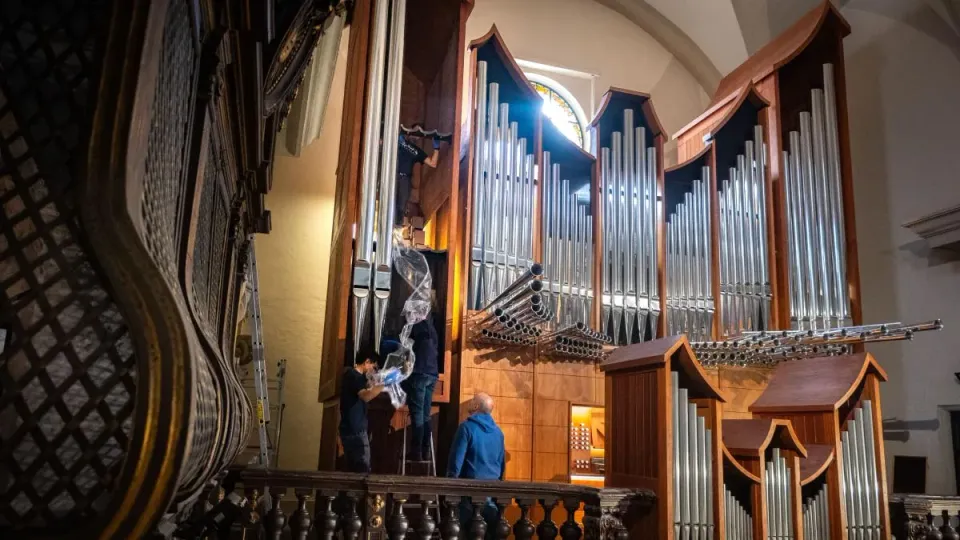
Barcelona’s historic Oratory of Sant Felip Neri in the Gothic Quarter has finally unveiled a monumental new organ, 59 years after the project began. This significant cultural addition will be officially inaugurated with a special concert on 18 May, marking a major milestone for the city’s musical heritage.
The completion of the organ culminates decades of dedication, largely driven by renowned organist Montserrat Torrent, who celebrates her centenary this year. Torrent championed the initiative to equip the Oratory with a world-class instrument, a space famously frequented by architect Antoni Gaudí before his fatal tram accident. Manuel Manonelles, the Oratory’s projects director, highlighted the instrument’s exceptional quality, stating, “Experts tell me it is the equivalent of a Lamborghini and a Ferrari.”
A Vision Decades in the Making
Montserrat Torrent’s commitment to the project stemmed from her observations abroad. Expert Albert Torrens detailed Torrent’s early visits to the temple in the 1940s with her mother. Torrent reflected on her motivations in Torrens’ 2020 book, Montserrat Torrent, la dama de l’orgue (Montserrat Torrent, the Lady of the Organ), explaining, “When I went abroad I realised that our organs were very poor in sound and that in Barcelona there wasn’t a decent one. (…) I always liked the church of Sant Felip Neri very much: very secluded, silent, dark, perfect for concerts.” A first contract for the organ was signed in 1966, but the project faced decades of paralysis due to a lack of funding.
Collaborative Effort Brings Organ to Life
The installation of the final ten pipes this week completed the instrument, which features a baroque sound and will bear Montserrat Torrent’s name. This final chapter saw significant contributions from religious figure Antoni Serramona, the last “felipón” to reside in the Gothic Quarter oratory. Serramona encouraged Torrent to complete the project during his lifetime; he passed away in 2022, just two months after the inauguration of the organ’s first phase. Funding for the renewed works came from a collaborative effort involving the Ajuntament de Barcelona (Barcelona City Council), the Generalitat (Government of Catalonia), the Montserrat Torrent Foundation, the Oratory itself, and the ‘La Caixa’ Foundation.
Sant Felip Neri’s Rich Musical Legacy
This new instrument marks the fifth organ in the Oratory of Sant Felip Neri, founded in 1673 by the ecclesiastic Oleguer de Montserrat. The Oratory stands as one of only three ecclesiastical complexes in Barcelona that survived destruction during historical conflicts such as the Tragic Week (Semana Trágica) and the Spanish Civil War. Music has played a prominent role throughout the Oratory’s 350-year history as a place of preaching and spiritual reflection. San Filippo Neri, founder of the Congregation of the Oratory of Saint Philip Neri, believed artistic beauty and music served as pathways to connect with God.
Barcelona’s Oratory and the Birth of a Genre
Manuel Manonelles further explained that San Filippo Neri, alongside Italian sacred music composer Giovanni Pierluigi da Palestrina, invented the musical genre of the oratorio in Rome during the 16th century. Manonelles affirmed, “Historically all Oratories, and Barcelona in particular, have focused on religious music.” Between 1770 and 1825, the Barcelona Oratory commissioned and funded the composition and performance of over 70 musical oratorios. It also holds the distinction of being the first church in Catalonia where congregants actively participated in liturgical chants, predating Pope Pius X’s formal mandate for such involvement.
Following its inauguration on 18 May, the new organ will resonate weekly, with titular organist Bernat Bailbé performing every Sunday. This completion not only honours Montserrat Torrent’s enduring legacy but also reaffirms the Oratory of Sant Felip Neri’s vital role as a centre for music and culture in Barcelona for generations to come.
Come and join our Barcelona English Speakers community on WhatsApp.
Originally published by La Vanguardia Catalonia. Read original article.