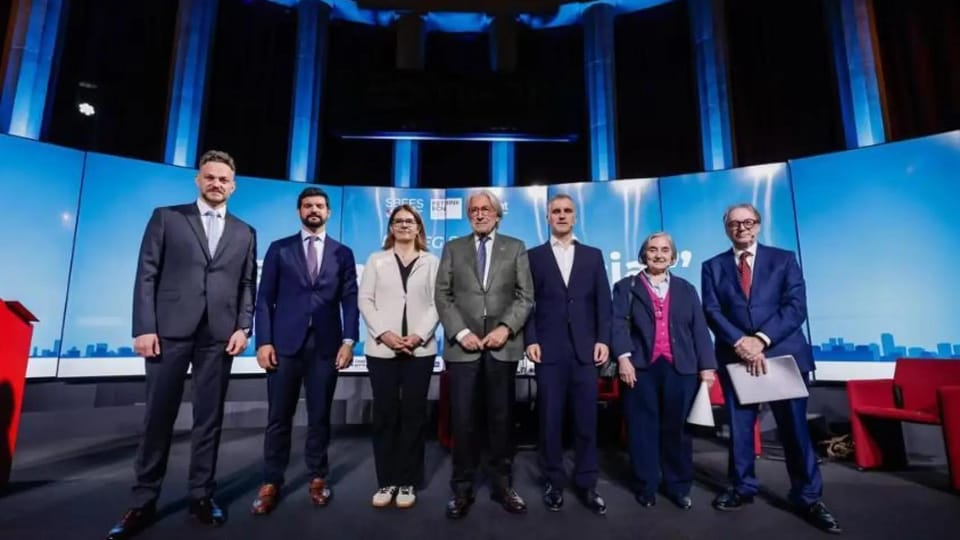
Barcelona's social sector is increasingly recognised as a critical economic driver, with leaders asserting its potential to shape the metropolitan area's future prosperity. This shift was a central theme at the recent Rethink Barcelona debate series.
Josep Sánchez Llibre, president of Foment del Treball, stated that Catalonia "can be one of the first regions in Europe to base its growth and prosperity" on social policies and initiatives. This perspective highlights a "revolution" where social action powers economic progress.
Felipe Campos, CEO of Aigües de Barcelona, emphasised that "social Barcelona is one of the great strengths" underpinning the city's current and future model. He noted the professionalism and dedication within these social entities, which form a dense network of people proud of their work.
Social Sector's Growing Economic Influence
The Rethink Barcelona debate cycle, organised by the Societat Barcelonesa d’Estudis Econòmics i Socials (SBEES) and promoted by Foment del Treball, explored this sector's analysis. Participants included Fundación La Caixa, Fundación Roure, and the Catalonia H&R hotel group. These discussions illustrate the richness of the social sector.
This new economic model complements existing strengths like top-tier technology centres, research areas, universities, and an advanced business fabric. Public administration also plays a role, collaborating with the private sector to foster growth and establish connections that help the region thrive.
Key Projects Drive Metropolitan Development
The metropolitan area already sees dynamic development zones. The Besòs area, spanning Sant Adrià and Badalona, focuses on the Tres Xemeneies project, with construction starting in 2026. This project is expected to be key for Catalonia's future development.
Meanwhile, L’Hospitalet de Llobregat is undergoing urban regeneration to create a major biotechnology centre. This initiative aims to generate 50,000 jobs and include 500,000 square metres of green spaces. These developments show a broader metropolitan strategy to diversify the economy.
Supporting Vulnerable Communities
Experts at the Foment session highlighted the social sector's crucial role in supporting citizens, noting its enormous "cohesive, human, and economic" potential. With many pressing problems, and public administration unable to address every issue, the participation of social entities with private involvement becomes essential.
These entities often provide constant and individualised support to vulnerable people. This proximity-based approach helps address urban problems and challenges directly within communities. The future of metropolitan development depends on these targeted social policies.
A New Economic Model for Catalonia
After a past shaped by industrial and service economies, where tourism remains important, a social engine now emerges to characterise Catalonia and the entire Barcelona metropolitan area. This shift represents a fundamental change in how the region views its economic foundations.
This evolving economic landscape offers new opportunities for residents and businesses alike. It prioritises community well-being alongside traditional economic indicators, aiming for a more inclusive and resilient future for the region.
Come and join our Barcelona English Speakers community on WhatsApp.
Originally published by Metrópoli Abierta - Urban Life. Read original article.